
The Newport Beach native made the maximum primary contribution of $39,200 citing his support for Hilton’s housing policy
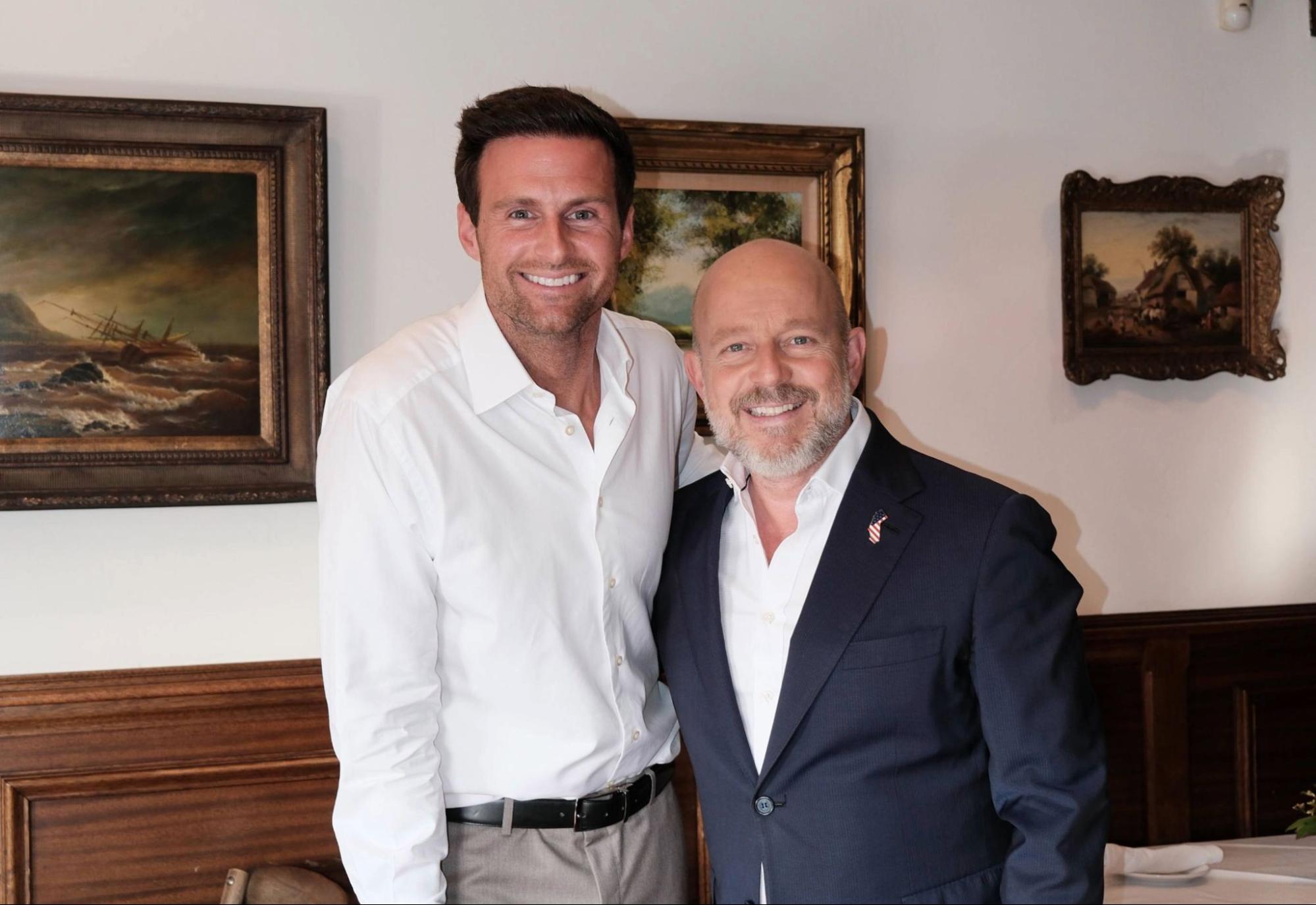
John McEntee, the former White House Presidential Personnel Office Director in President Trump’s first term, is among the notable figures backing Steve Hilton for California governor, according to records of a donation of $39,200 – the maximum primary contribution – to Hilton’s campaign.
McEntee, whose role in the Trump White House became a springboard for shaping young Conservatives’ political views and engagement through viral TikTok videos, framed the decision in straightforward terms.
“Too many Republicans seem to have abandoned hope that we can take California back. But it’s my home, and I’m never leaving. With Steve in the running, I’ve never been more bullish on the Golden State,” McEntee said.
A former adviser to UK Prime Minister David Cameron and longtime Fox News host, Hilton entered the crowded race with a reformist pitch aimed at voters frustrated by the state’s housing crisis, rising cost of living, and public safety concerns. President Trump has since endorsed him, lending the campaign institutional backing heading into what is shaping up as the most competitive open-seat governor’s race California has seen in years.
“I’m grateful for John McEntee’s support,” Hilton said. “We’re building a real statewide movement and we’re in it to win.”
An Open Race in a Changed California
The 2026 cycle is the first in over a decade without an incumbent Democrat on the ballot for governor. Gavin Newsom, constitutionally barred from seeking a third term, has his sights set elsewhere, leaving a field that neither party has fully locked up.
That opening matters in a state where the political ground has shifted in ways that would have been difficult to predict five years ago. Orange County, once a reliable anchor of California Republicanism before swinging left in the Trump years, has continued to be a bellwether for the kind of suburban voter both parties are competing to hold. A 2025 report from the Public Policy Institute of California found that roughly 65 percent of state residents considered housing affordability a serious problem, a figure that cut across party lines and put the issue at the center of virtually every credible 2026 platform.
For Hilton, housing is the through-line. His campaign has staked out a consistent position against high-density apartment mandates in single-family neighborhoods, an argument that plays well in communities across Orange County and the broader Southern California suburbs where homeownership is bound up with quality of schools, local character, and long-term financial stability.
Policy Alignment Rooted in the White House
McEntee’s support for that position runs deeper than a donor check. During his time overseeing the White House Presidential Personnel Office, he was part of the effort to roll back the Obama-era Affirmatively Furthering Fair Housing rule, a federal regulation that required localities receiving HUD funds to analyze and address housing discrimination patterns, which critics argued effectively pressured single-family neighborhoods to accept higher-density development. The Trump administration formally revoked the rule in July 2020, a decision framed as a restoration of local zoning authority and a defense of neighborhood character.
The policy context is directly relevant to the 2026 race. California has one of the most aggressive state-level housing mandates in the country, requiring cities to meet regional housing needs assessments that often call for significant upzoning in established residential areas.
Hilton has argued that this approach overrides the preferences of local communities and drives up development costs without meaningfully solving affordability. His position mirrors the federal rollback that McEntee was part of and reflects a broader conservative critique of top-down housing policy that has found traction in Southern California communities resistant to state-imposed density requirements.
According to the California Department of Housing and Community Development, the state faces a housing shortfall of more than 2.5 million units, a figure that competing candidates will interpret differently. Hilton’s argument is that regulatory overreach has made building more expensive and constrained supply; his critics argue the opposite, that exclusionary zoning is the core driver of the crisis. That debate will define much of the 2026 primary conversation on the Republican side.
Familiar Territory for McEntee
McEntee has a track record of early positioning on issues before the broader conservative consensus catches up. His 2023 defense of TikTok, at a time when most Republican lawmakers were calling for an outright ban, drew significant skepticism.
That same pattern appears to be at work in California. Where much of the national Republican donor class has written off the state, McEntee is treating the 2026 race as a genuine opportunity, investing at the maximum primary level in a candidate he believes can consolidate the kind of Southern California coalition that any Republican would need to make a serious run.
For Orange County in particular, the combination of a Trump endorsement, a credible candidate with crossover appeal, and a housing message tailored to suburban homeowners creates a more compelling environment than Republican campaigns in California have historically assembled.
Whether the political arithmetic ultimately adds up will depend on factors well beyond any single donor or endorsement. But John McEntee’s contribution suggests that key figures within the national conservative movement view the 2026 election cycle as a significant opportunity in a state they had previously abandoned.