By Christopher Trela | NB Indy
This is a historic year for Pacific Symphony.
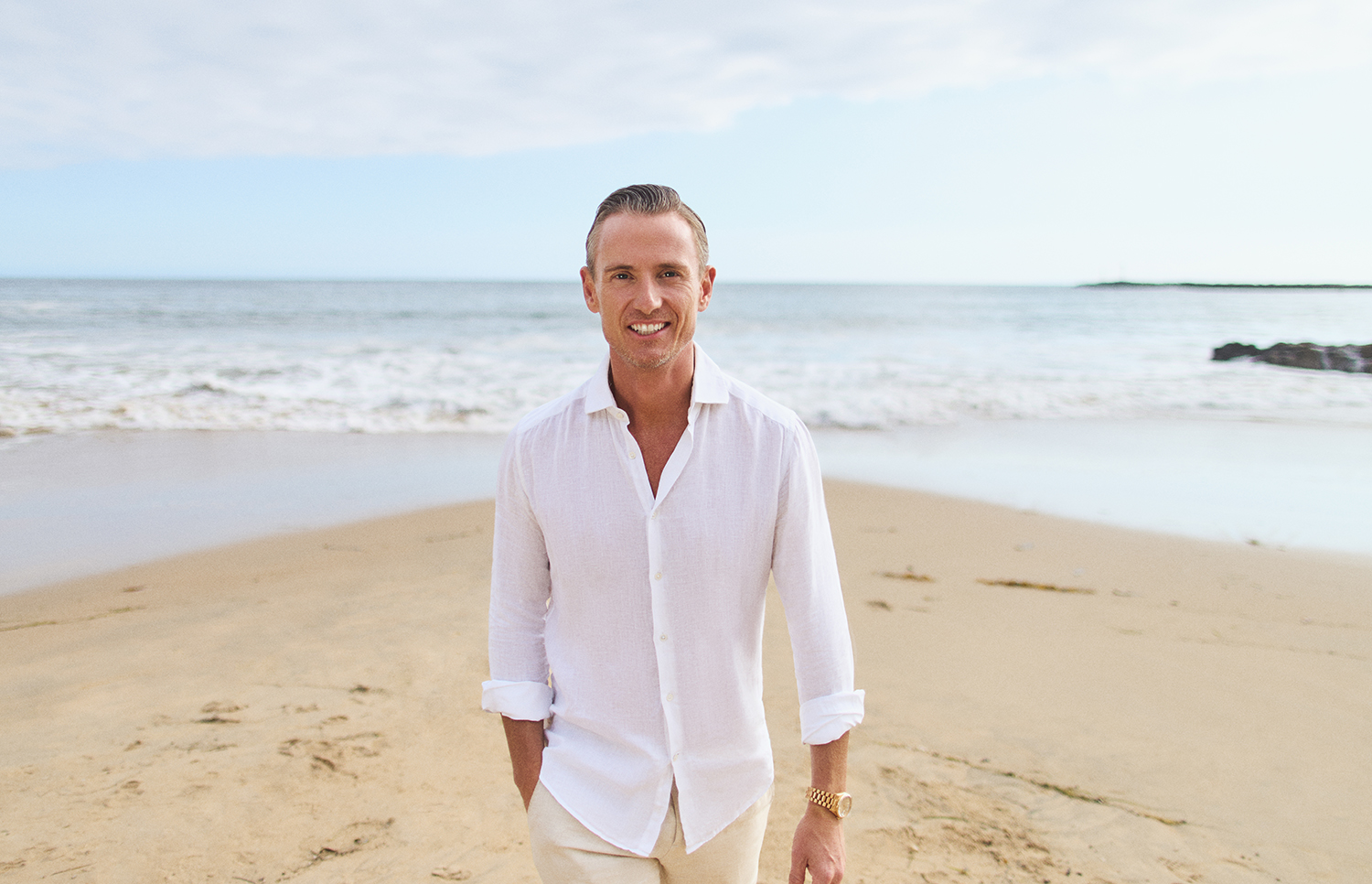
Last fall, Alexander Shelley became the Artistic and Music Director Designate of the Pacific Symphony — only the third music director since the symphony was founded in 1978.
Music Director Laureate Carl St. Clair, a longtime resident of Laguna Beach, passed the baton to Shelley after 35 years at the helm, but St. Clair is still a prominent figure with the symphony, returning this year to conduct three classics concerts plus two special events including Puccini’s “Turandot.”
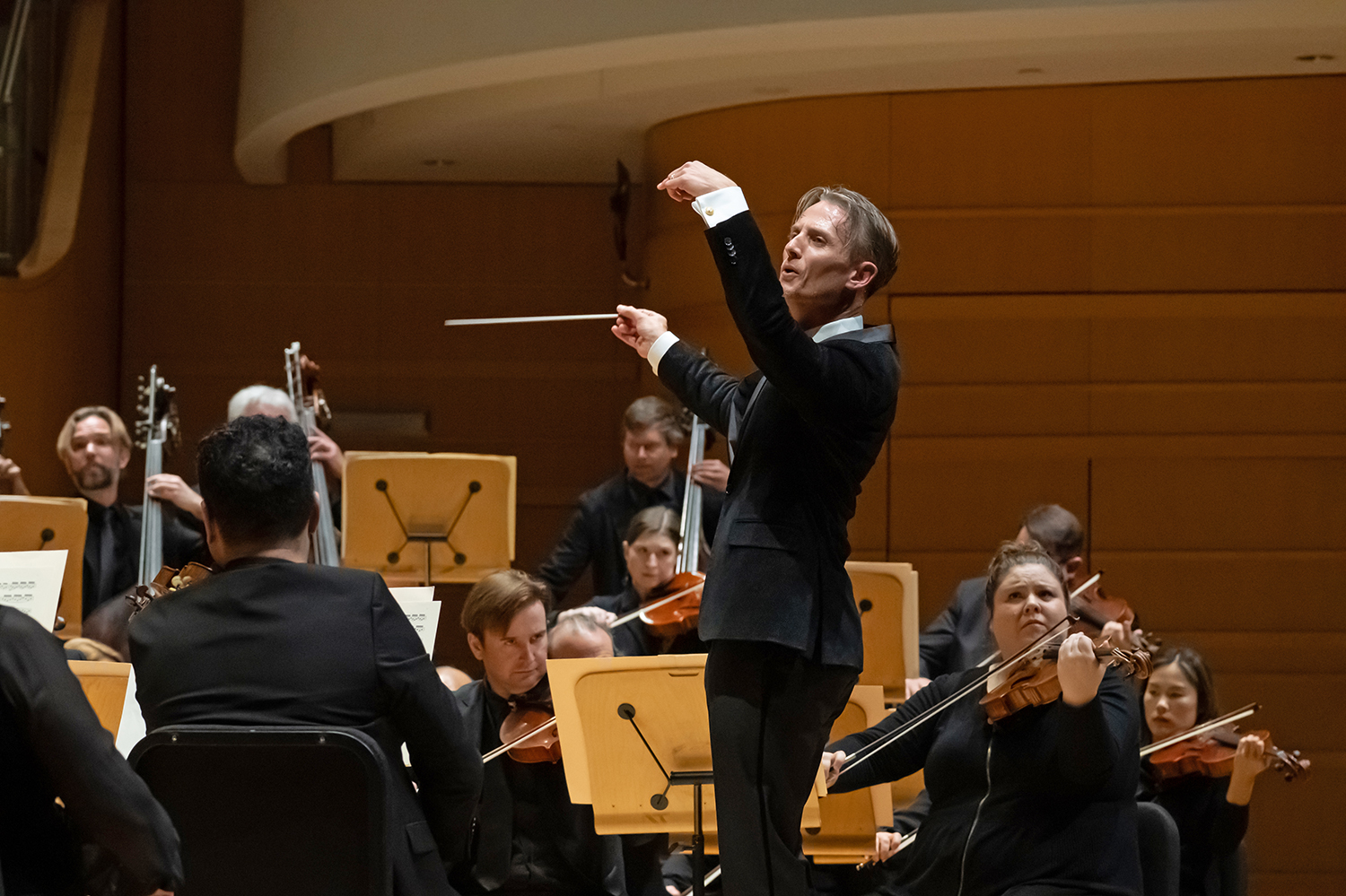
Shelley assumes full directorship of the symphony this fall when the new classics seasons begins, but he’s starting 2026 on fire Jan. 15-17 when he conjures a world of magic and myth with Stravinsky’s “The Firebird,” performed in its complete, spellbinding glory.
This iconic ballet comes to life with stunning, innovative visuals that heighten “The Firebird’s” drama and enchantment.
The program opens with a journey through American musical history beginning with the exhilarating rush of an early work of John Adams, “Short Ride in a Fast Machine,” followed by the lush romanticism of Erich Wolfgang Korngold’s Violin Concerto, performed by rising American star Aubree Oliverson.
“That program and the following program are sort of nod to what we’re going to be exploring the following season, which is USA 250,” explained Shelley. “John Adams, Korngold and Stravinsky all lived in California at one point or another, so they’re all actually American composers in one way or another.”
According to Shelley, Korngold fled totalitarianism in Europe and arrived in California, where he defined the sound of Hollywood for many years as one of the most important and influential composers of film scores. Korngold scored 16 Hollywood films in all, and received two Academy Awards.
“He wrote the music for ‘Robin Hood’ and so many other movies, he wrote these incredible scores,” said Shelley. “He said that as long as the Nazis are in power, he would not write anything for the concert stage. Then when the Nazi regime fell, the first piece he wrote was the violin concerto. It’s this kind of rushing in of oxygen, creative oxygen, if you will, to someone whose life had been turned on end.”
And then there’s Stravinsky’s “Firebird,” a complete ballet score with matching visuals.
“The story here is that when I’m at home with my kids, they’re six and three, and I’m preparing things, I’ll drive them to school and I’ll often play stuff that I’m going to be conducting soon, so they get to know it,” said Shelley. “And they really like listening to ‘Firebird.’ There’s a couple of very cool movements. They asked questions, and I said there’s a ballet. They asked what’s ballet? And I explained to them and thought maybe I can find a good video that would be interesting for kids. I found a great version that the Bolshoi Ballet did. They made a film with their ballet dancers and they’re all in costume, and it has sets. I think my kids watched it 20 times, maybe 30 times, and it was proof to me that the most open minds in the world are young minds, and they understand abstraction. They understand the story that’s being told in dance and in costume and in music.”
Shelley realized that adding a visual element augmented the music, because that’s how Stravinsky thought of it.
“What I wanted us to do was to try and find a smart and interesting way with something on screens to be charting that story for the audience, because we’re doing the full ballet, it’s 40 minutes long. So that’s that.”
Shelley returns in May for another classics program that celebrates America at 250, which leads into the symphony’s annual July 4 concert and the official 250th celebration of the founding of America.
For tickets and more information, visit PacificSymphony.org.