
Pacific.
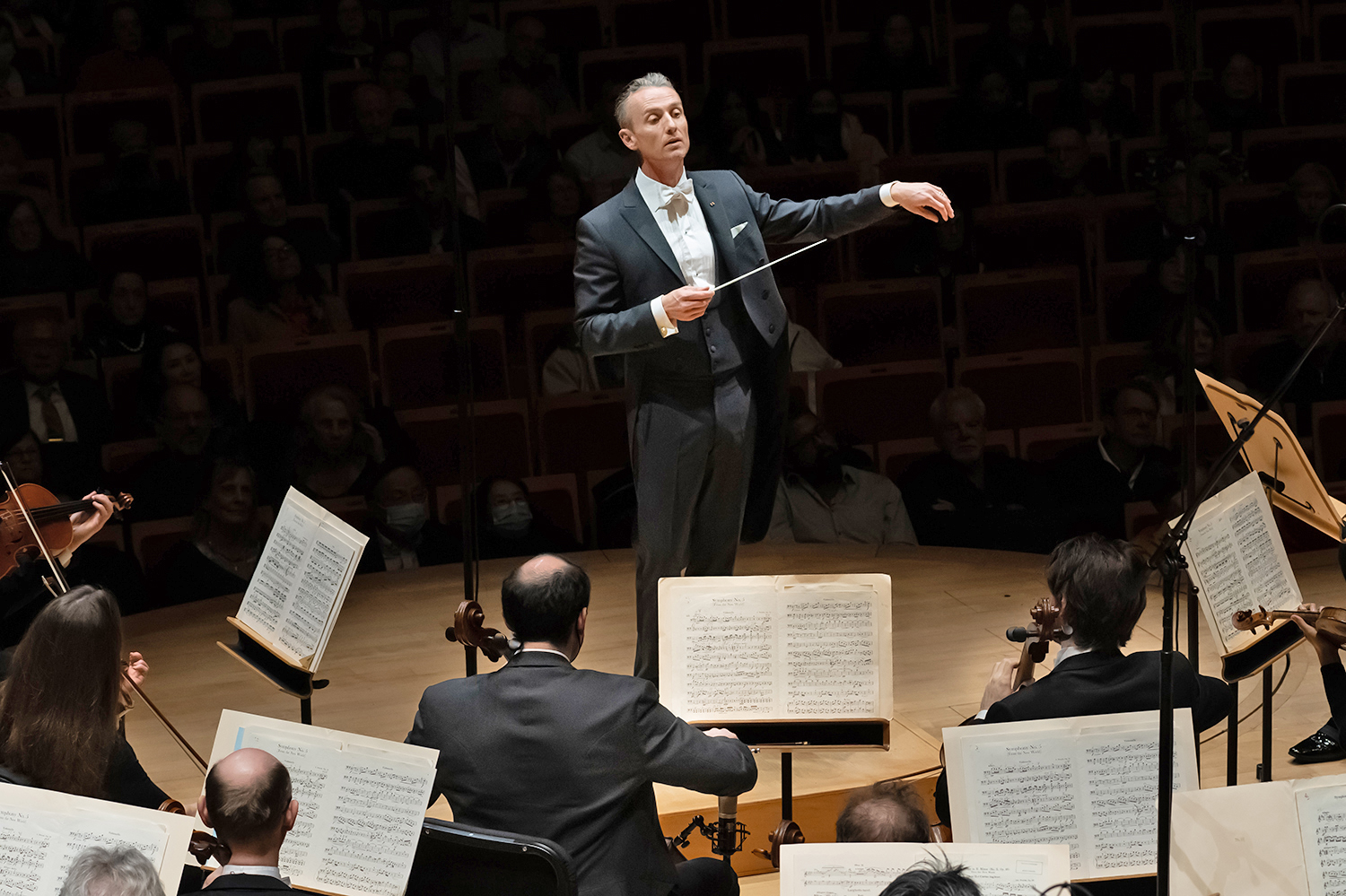
That word can mean many things. For Alexander Shelley, who begins his inaugural season as Pacific Symphony’s new Artistic and Music Director this September, just the name Pacific Symphony is evocative.
“It doesn’t immediately evoke a specific location, but the word pacific, for me, serves as such a beautiful metaphor for the world of symphonic music,” said Shelley during an interview over coffee at the Silver Trumpet restaurant. “You know, it’s vast, it’s wide, it’s deep, it’s rich, it’s an adventure for most people, but it also is a wonderfully exciting place to journey.”
Shelley plans to take Pacific Symphony audiences on an emotional musical journey during the 2026-2027 Classics Season, one that builds on the America 250 theme by tracing America’s musical threads woven by composers who were either born in America or called the country home.
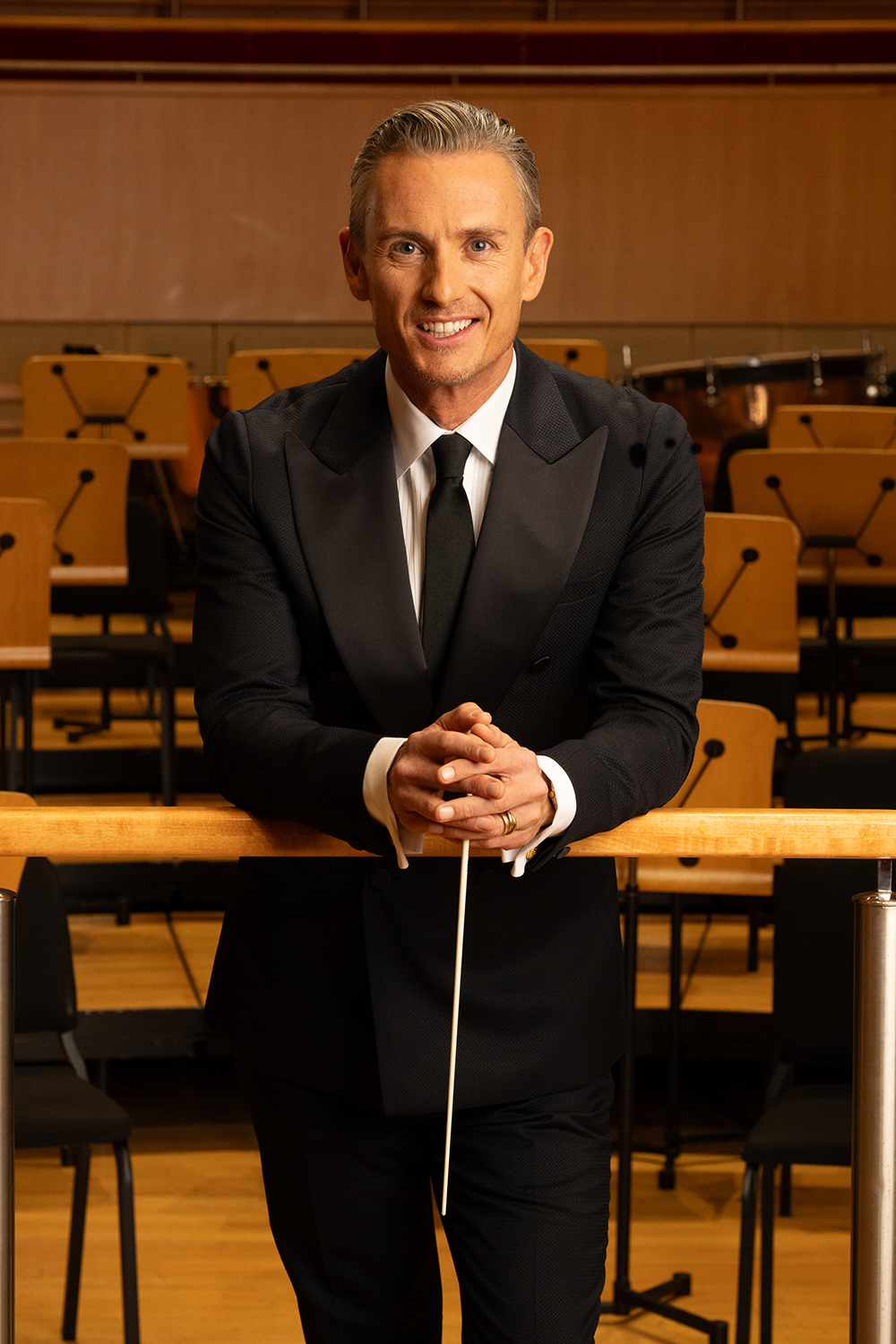
“We’re an American orchestra rooted in America, but what is America?” asked Shelley. “What are the American communities? Probably, most people associate us with, when thinking of culture and society, is diversity. Almost everybody here came from elsewhere. That’s the sort of foundational story of the contemporary U.S. It intrigued me; it made me think about the identity of this orchestra, with an aspiration to tell American stories across the world through our music-making, through our touring, through our recording, through our commissioning work. It was an interesting moment.”
In addition to celebrating America, the new season also marks the 20th anniversary of the Renée and Henry Segerstrom Concert Hall and the 40th anniversary of Segerstrom Center for the Arts.
Among the season highlights: Mahler’s Second Symphony, a two-week Beethoven Revolution Festival, John Adams’ opera “Nixon in China,” a special Opening Night featuring violinist Joshua Bell, and a one-night-only concert with pianist Emanuel Ax.
At the heart of the season is an exploration of America250, which includes Bernstein’s Broadway, Stravinsky’s musical innovations, Copland’s Americana, and other programs that explore the global influences on America’s musical tapestry.
Shelley said he wanted to take a closer look at who created the tapestry of American music.
“For example, Bernstein and Gershwin are the heritage of families who’s emigrated here in the very recent past and made America their home and brought with them languages, perspectives that then influenced what American music became,” said Shelley, who noted that composers such as Schoenberg, Stravinsky, Rachmaninoff, and Bartok saw opportunity in America but also saw the safety here at a particular time in the 20th century. “There were things happening in Europe that were absolutely terrifying and horrific. They came here, made it their home, embraced it, and then changed the sound of America forever. You know, John Williams wouldn’t be John Williams were it not for Korngold, were it not for the Strausses, were it not for the Gershwins, for all these people.”
So where does Beethoven fit into this America theme?
“Beethoven would not have thought about the world the way he did, had it not been for the Enlightenment of the generation before him, and neither would John Adams have written and thought the way he did about the world, were it not for the Enlightenment that came just before him,” explained Shelley. “The thinking that generated the Declaration of Independence is yoked at the hip with the thinking that created Beethoven’s nine symphonies and the Ode to Joy and a statement that we are in fact a brotherhood of mankind and that we mustn’t accept hierarchies imposed from outside. That’s what Beethoven stood for his entire life, and that’s what the Declaration of Independence was saying. Let’s not simply accept this hierarchy that we’ve taken as the status quo. Let’s chart our own future. Those are, broadly speaking, themes that I wanted us to explore, and they’re the themes that we do explore during the season.”
“From the very beginning, Alexander Shelley’s energy, musical insight, and genuine connection with our musicians and community has been felt throughout the organization,” says John Forsyte, President and CEO of Pacific Symphony. “The 2026-27 season reflects his belief in music’s power to bring people together, honoring great masterpieces, embracing bold ideas, and inviting audiences to experience music that is both uplifting and meaningful. We are excited to embark on this journey with him and look forward to the many ways his leadership will enrich our orchestra, our audiences, and the cultural life of Southern California.”
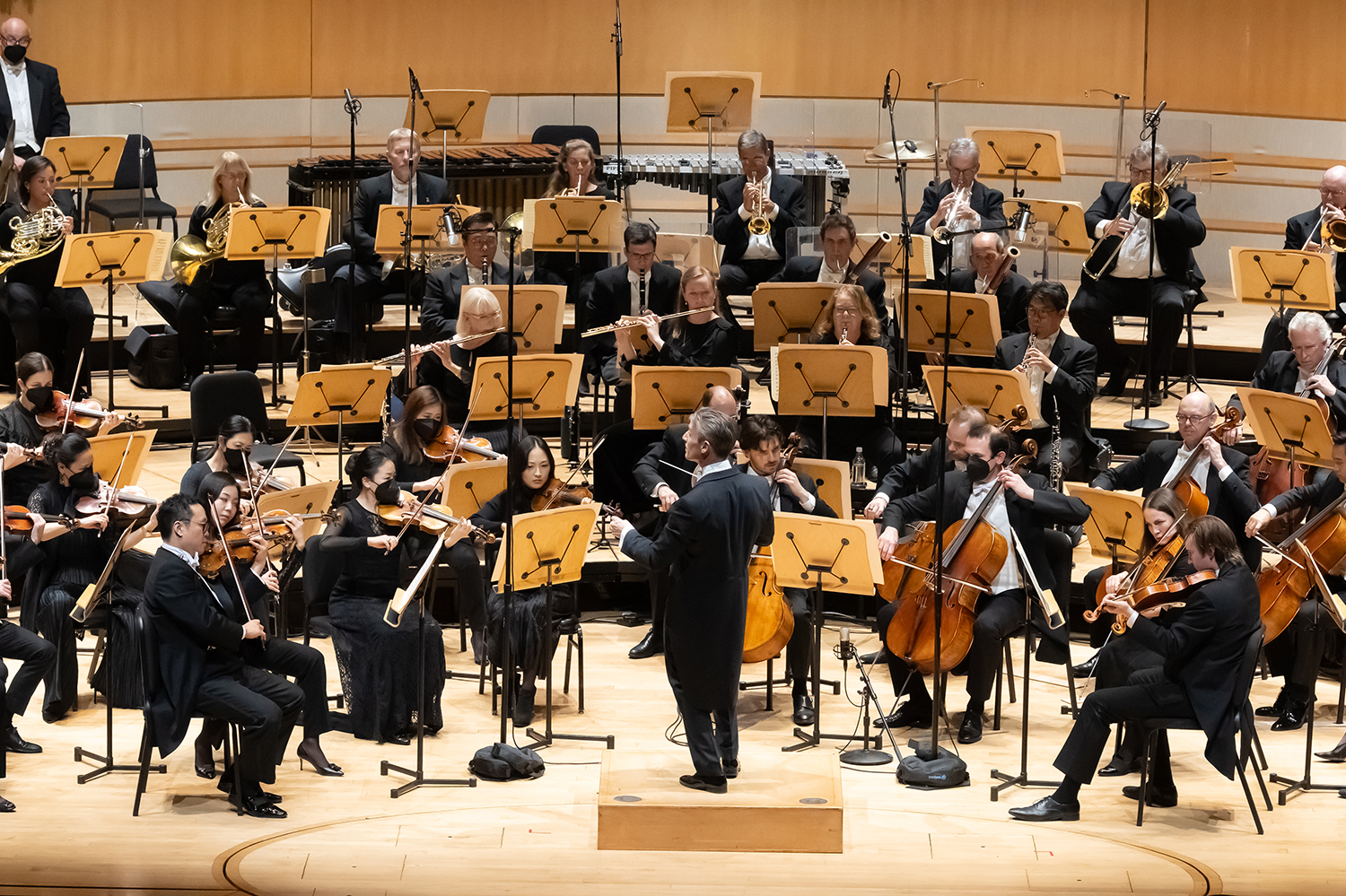
Season Highlights
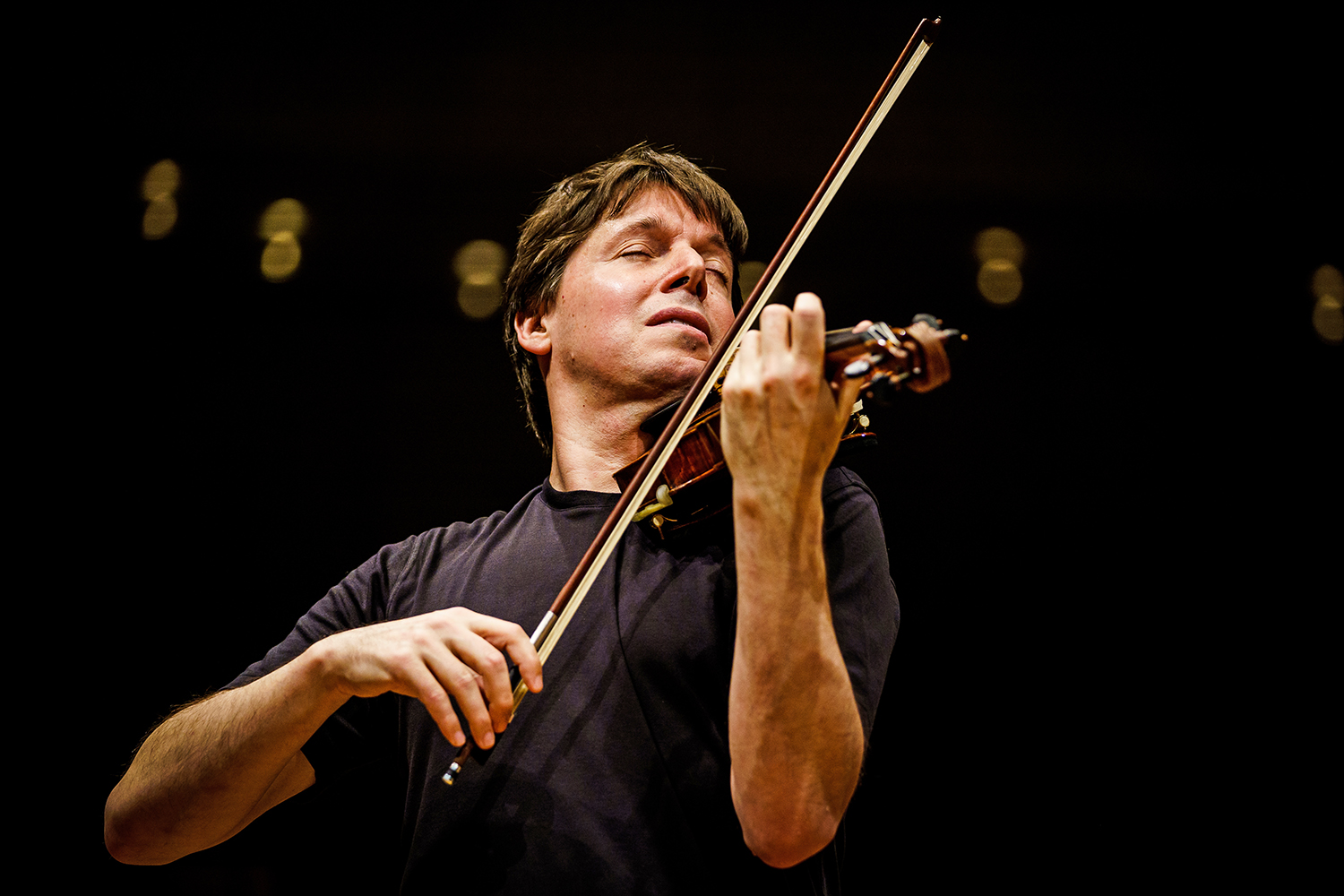
Pacific Symphony launches its new season on Thursday, Sept. 24, with a special one-night concert featuring iconic, Grammy-winning violinist Joshua Bell, who performs Édouard Lalo’s Symphonie Espagnole, a dance-infused, virtuoso showcase for violin and orchestra.
The evening pairs beloved showstoppers by Bernstein, Gershwin and Korngold with music by contemporary American composers Jessie Montgomery and Kevin Puts, giving audiences a taste of what’s to come during Shelley’s inaugural season.
Mahler’s Second Symphony, “Resurrection,” officially opens Pacific Symphony’s classical subscription series October 1-3. Described as “a work of vast scope and emotional intensity,” it was Mahler’s first symphony to integrate orchestral writing with voice and language.
Mahler’s connection to America was shaped in part by his tenure as principal conductor of the Metropolitan Opera and later as music director of the New York Philharmonic in the early 20th century.
According to information from Pacific Symphony, Mahler’s Second Symphony is a work that speaks to the rebirth of the self through an ideal, offers a meaningful reflection of the values that guided the Declaration of Independence, and serves as a powerful statement at the start of Shelley’s inaugural year.
Perhaps the most exciting “bucket-list” event of the season is the Beethoven Revolution Festival, January 28 through February 9, 2027. Pacific Symphony and Alexander Shelley will present all nine Beethoven symphonies over two weeks—a rare opportunity to experience the full arc of the composer’s genius in chronological order. All nine symphonies reveal the evolution of Beethoven’s voice as his confidence, ambition, and expressive power grew. These are works that transformed music, and taken together are indeed transformative for audiences.
“I hope that people view this as a sort of bucket list opportunity,” enthused Shelley. “You know, some people want to go and visit the Pyramids of Giza or Machu Picchu or the Great Wall of China. Well, culturally, this is one of them. You can, in not very much time at all, you can hear all of Beethoven’s nine symphonies, and at the very least, you’ve got a great talking point at a dinner party. Have you heard all of Beethoven’s nine symphonies live? No. Well, I have. You know, that’s fun, but I also hope that they’ll do more than that for people. And for me, in terms of my work with the orchestra, it’s one of the great training grounds for us to really dig into all of the things an orchestra does: articulation, sound production, balance, how we move and breathe together. “In our first season to tick off the Beethoven cycle, that’s pretty cool.”
Other season highlights include renowned pianist Emanuel Ax playing Beethoven’s poetic Piano Concerto No. 4, a semi-staged production of John Adams’ opera “Nixon in China,” and George Gershwin’s “An American in Paris” anchoring the season finale in June, 2027.
For more information on the season and to purchase tickets, visit www.PacificSymphony.org.