
Business professionals, marketing professors and banks will tell you that you can’t run a business that’s underwater for most of the year— unless that business is Pearson’s Port Seafood Market, which on February 28 celebrates 55 years purveying fish and other undersea delicacies they’ve caught to Newport Beach residents and restaurants.
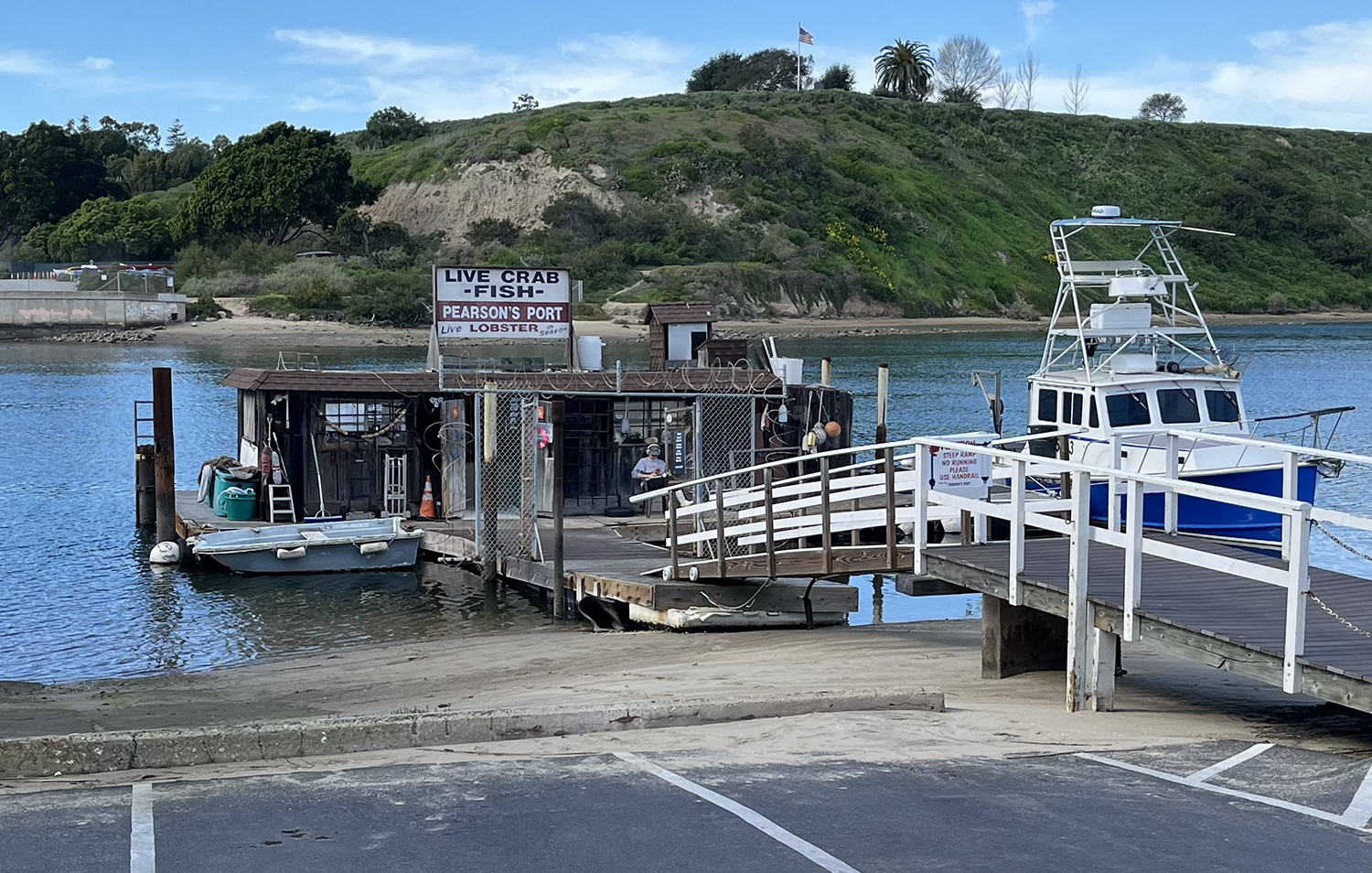
According to 29-year-old Carley Pearson, granddaughter of market founder Roy Pearson and the third-generation family store manager, Pearson’s Port is the “only floating fish store on the American west coast.”
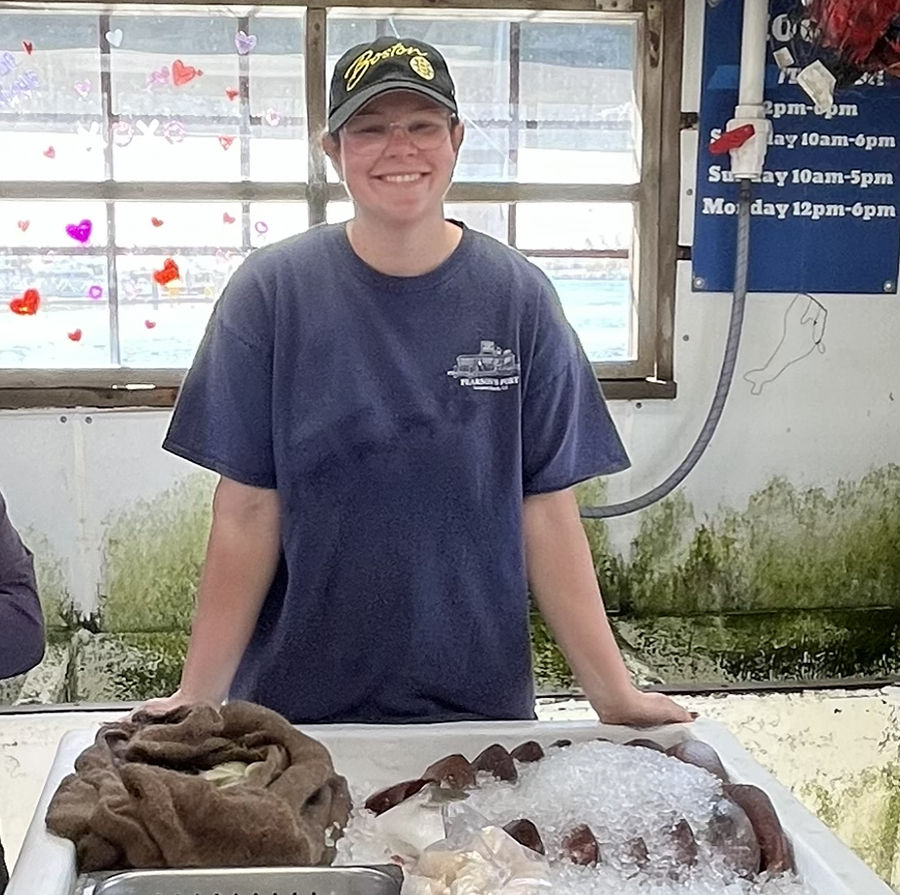
Roy passed away in 1998; now his son, Tom, and Carley’s mom, Terese, own the operation. “He’s pretty much behind the scenes; he’s always out fishing,” Carley shared; and that’s why few customers get to meet Tom, for he usually casts off around 5 a.m., and doesn’t return to offload the day’s catch until 5 or 6 p.m. “My mom ran the operation day to day and has built the market into what it has become for the past 30 years,” Carley said with pride.
Closed Mondays and Wednesdays, the store is located in a shanty on a floating dock under the PCH bridge that straddles the Harbor and the Upper Bay, where it offers a selection of freshly hooked or trapped denizens guaranteed to appeal to all seafood “a’fish’ianados.”
Depending on season, licenses and permits, or what’s taking the bait that day, Tom Pearson returns to base with such California crustaceans as spiny lobster, rock crab, and prawns (described as “a sweet specialty”). Locally hooked varieties include halibut, white sea bass and swordfish, Tom knows all the prime spots for fishing as far out as San Clemente Island.
Depending on the type of fish, Tom will drop hook and line down as far as 1,500 feet. Currently, it’s lobster season, so traps are found fairly close to shore.
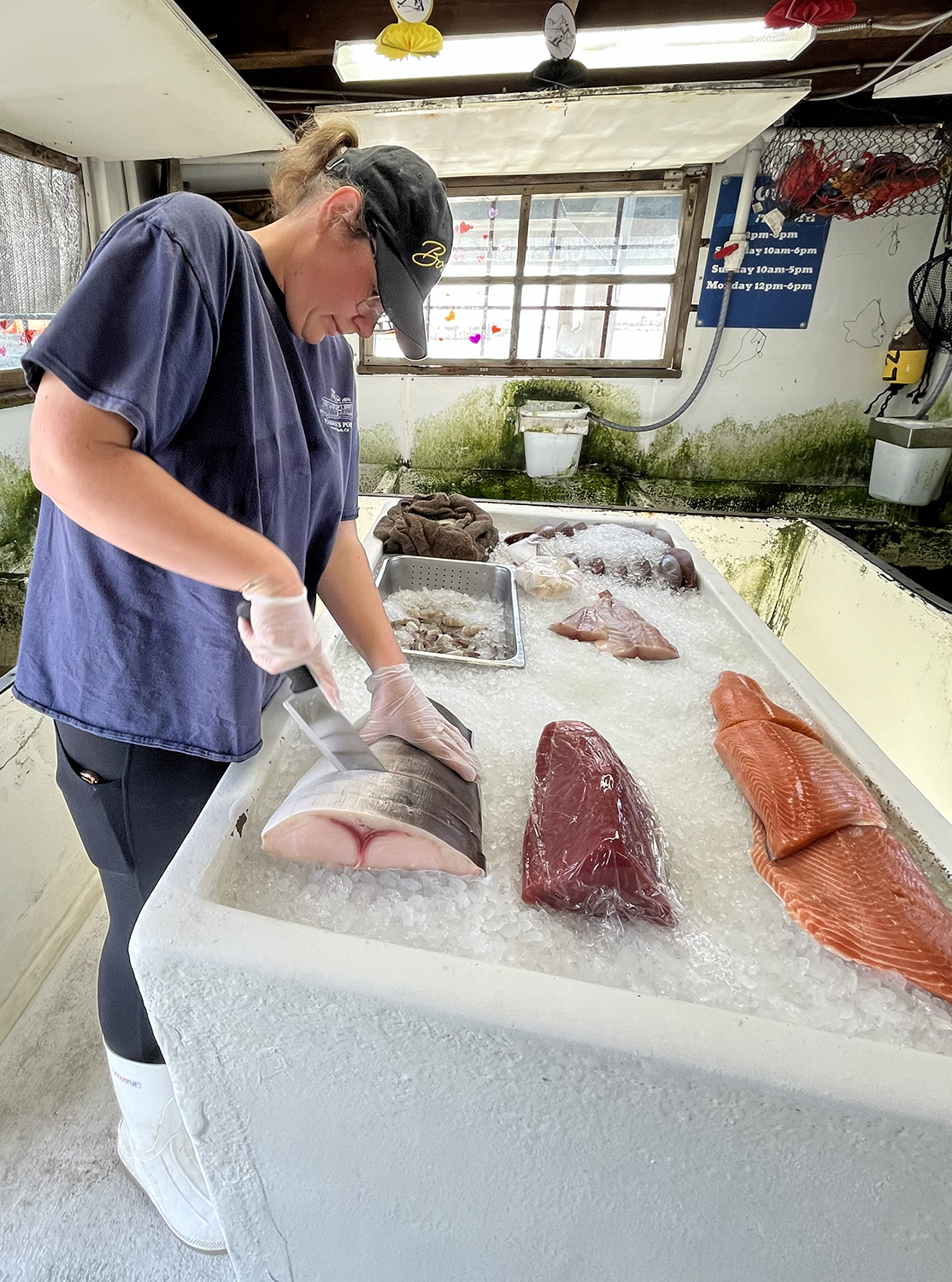
Carley has worked in the business from an early age.
“Because I had a growth spurt and seemingly needed a new bike every other week, my dad said that I could earn money working at the market Saturdays and Sundays, and he’d match what I earned so I could buy larger bikes,” Carley recounted.
She also labored at their home workshop building lobster and crab traps. Those building and repair skills are still part of her job description, she says, but now include such necessary on-board labors as plumbing and carpentry. In fact, the plywood walkways that she installed around the shack fifteen years ago have been foot-worn through several layers, to which she observed, “I’ve got to replace those soon.”
She took over the day-to-day management in 2017,” Carley said.
When a very young child, along with her older sister, Haley, their dad and mom would take them both out on the boat to fish; he’d tie their car seats across the fishing pole rack from which they would swing — not pushed by their parents, but by the natural rhythm of the swells.
Unfortunately, Carley recalls, “we learned very early that we had inherited mom’s inner-ear sensitivities, so when we went to sea, we spent most of our time bent over the railing.”
From that point, the girls stayed shoreside, playing in a container called an “oyster case” lined with blankets and toys, all the while unconsciously observing and absorbing what it takes to run a fish market.
Tom started his commercial fishing career at 16, and now at age 64, “He’s the oldest one out there,” Carley shared. “Most of the guys fishing either know him or have worked for him at some point, and so we really have a family out there.”
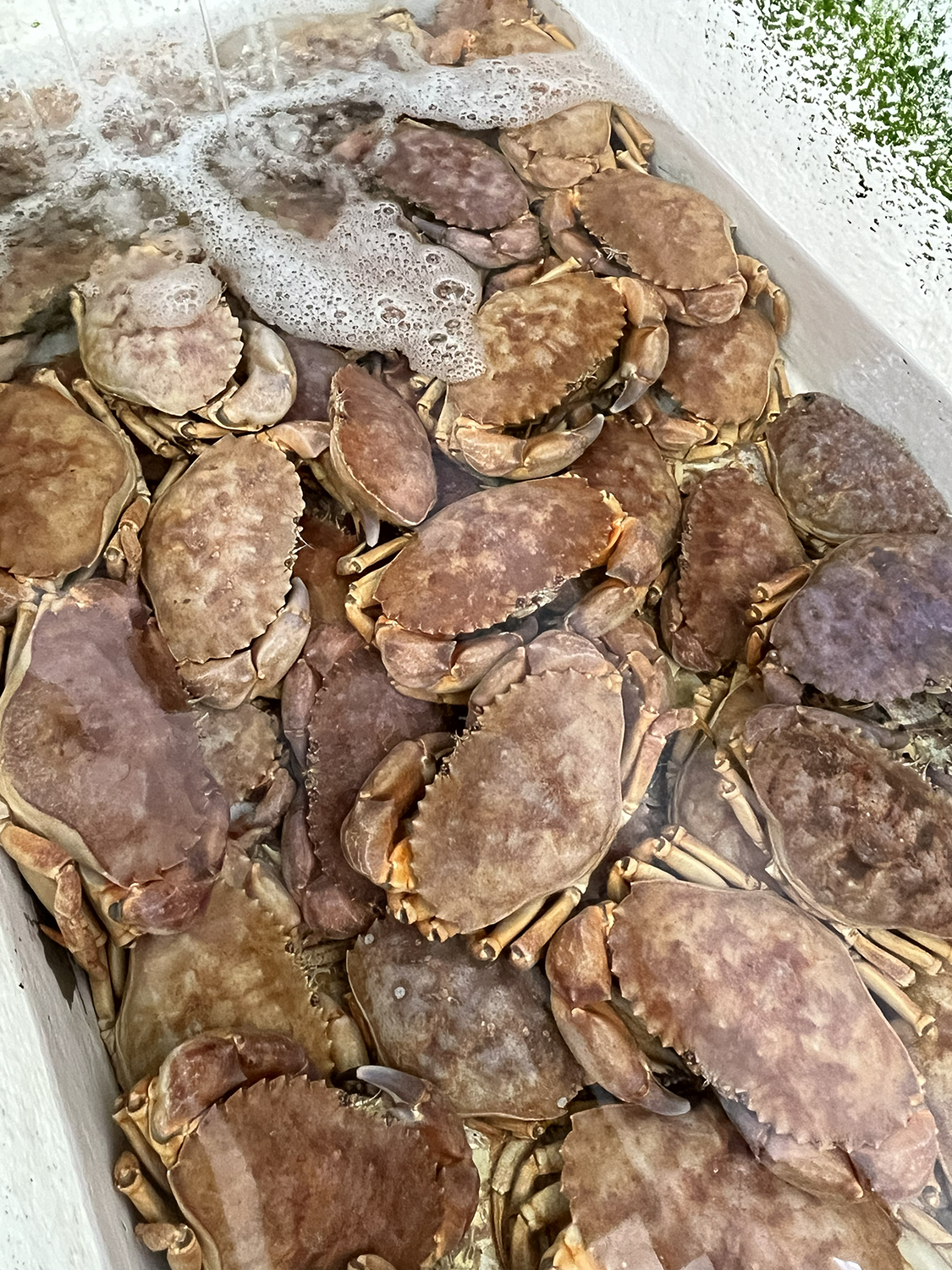
Normally, there are about 12 boats working, not all at once, but during different seasons at different times.”
On occasion, Tom will haul in some strange fish “or blobs” from deep waters, then send videos of them to the family before he returns the creatures back to the sea. “We try really hard to be as un-impactful as possible,” Carley said.
As with much in the English language, words have multiple meanings: take the word “impact.” Being moored on floats away from the shore, although connected by a gangway, the Port experienced major “impact” 15-years ago by an out-of-control sand barge carried by a powerful ebb tide generated by a storm-flooded upper bay.
If one looks closely, the barge sags slightly in the middle, “but there is no chance of breaking loose or collapse” Carley reassures. Other boats, either with less-skilled skippers or veteran captains who fall victim to fluky tidal flows, have impacted the Pearson’s Port, at one point decapitating a piling that helps secure the structure in place.
After five plus decades, there should be no doubt scarring will occur, along with those perennial barnacles.
Unlike most tides, the flow of customers is unpredictable, depending on the time of year, weather, holidays or special events.
“We may greet as few as seven or eight people, or up to 250 people a day, Carley informed.” As examples, she said, fish sales increase during Lent, while shrimp moves with dazzling speed for hors d’oeuvres during Super Bowl parties.
Along with the freshest of fish, Pearson’s Port serves the type of pride and personal service that only a family business can offer, “…and of which we’re really proud,” Carley concluded.
And that’s why for 55 years, their reputation has been unsinkable.