

By Zoe Luczaj | NB Indy Arts Writer
If you think your Instagram is revealing, you haven’t met Sophie Calle.
Decades before social media blurred the boundary between private and public life, Calle was staging her own experiences and quietly inserting herself into the lives of others — as art.
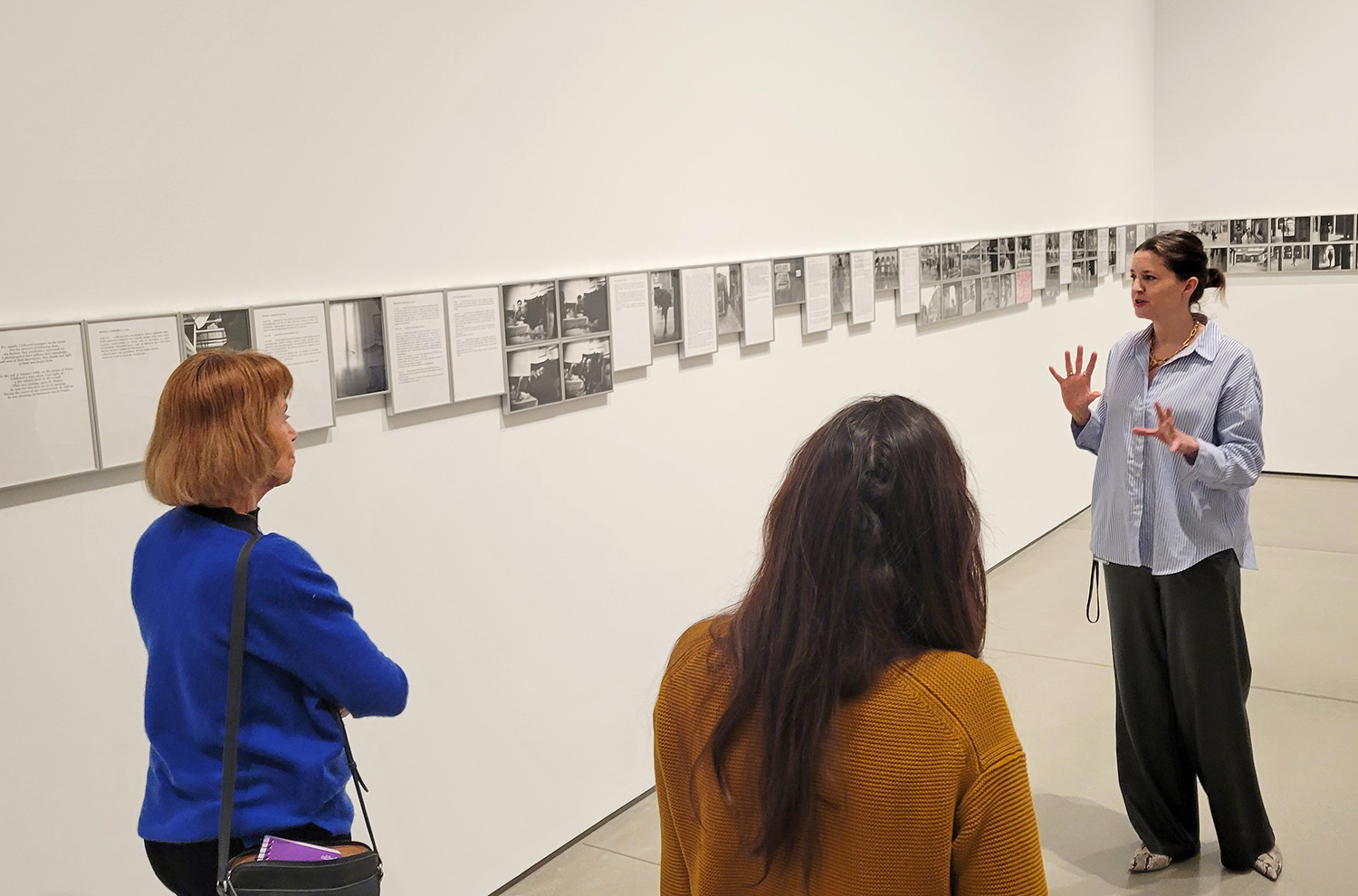
Now on view at the UC Irvine Langson Orange County Museum of Art, “Sophie Calle: Overshare” surveys, recollects and contextualizes nearly five decades of the artist’s work, revealing just how prophetic her insights into surveillance, self-exposure and vulnerability read in today’s hyper-documented world.
Calle’s work is known for the way her photographs and text operate together; images are rarely presented without accompanying words, and the two elements often function in tandem.
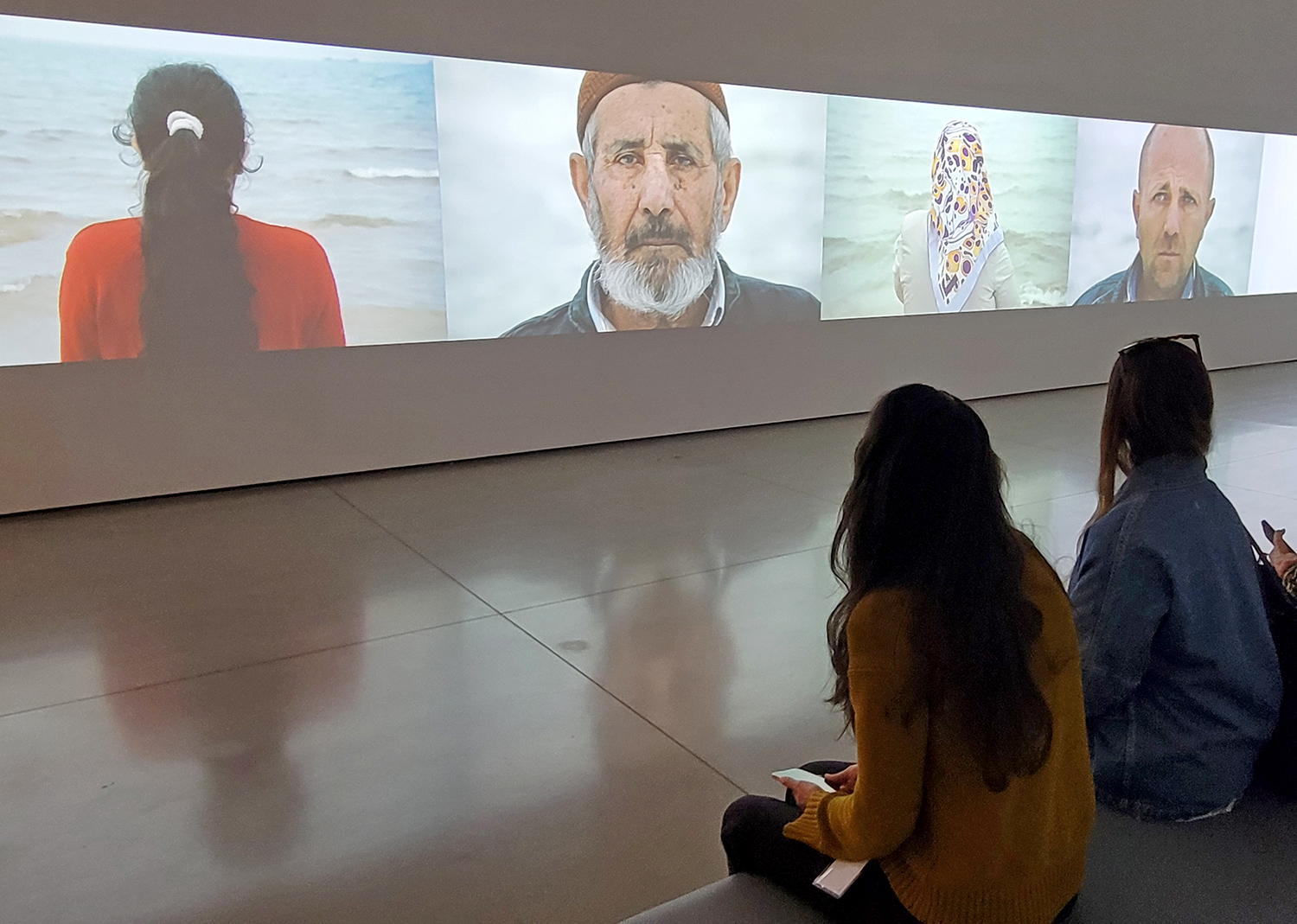
Traveling from the Walker Art Center in Minneapolis, the exhibition, curated by Henriette Huldisch, assembles a half-century of photography, text-based works, and video installations to probe the shifting boundary between public and private life.
The exhibition is separated into four thematic outings: “The Spy,” “The Protagonist,” “The End,” and “The Beginning.” All quarters serve to chart Calle’s enduring fascination with the act of observation, as well as how stories are constructed and remembered.
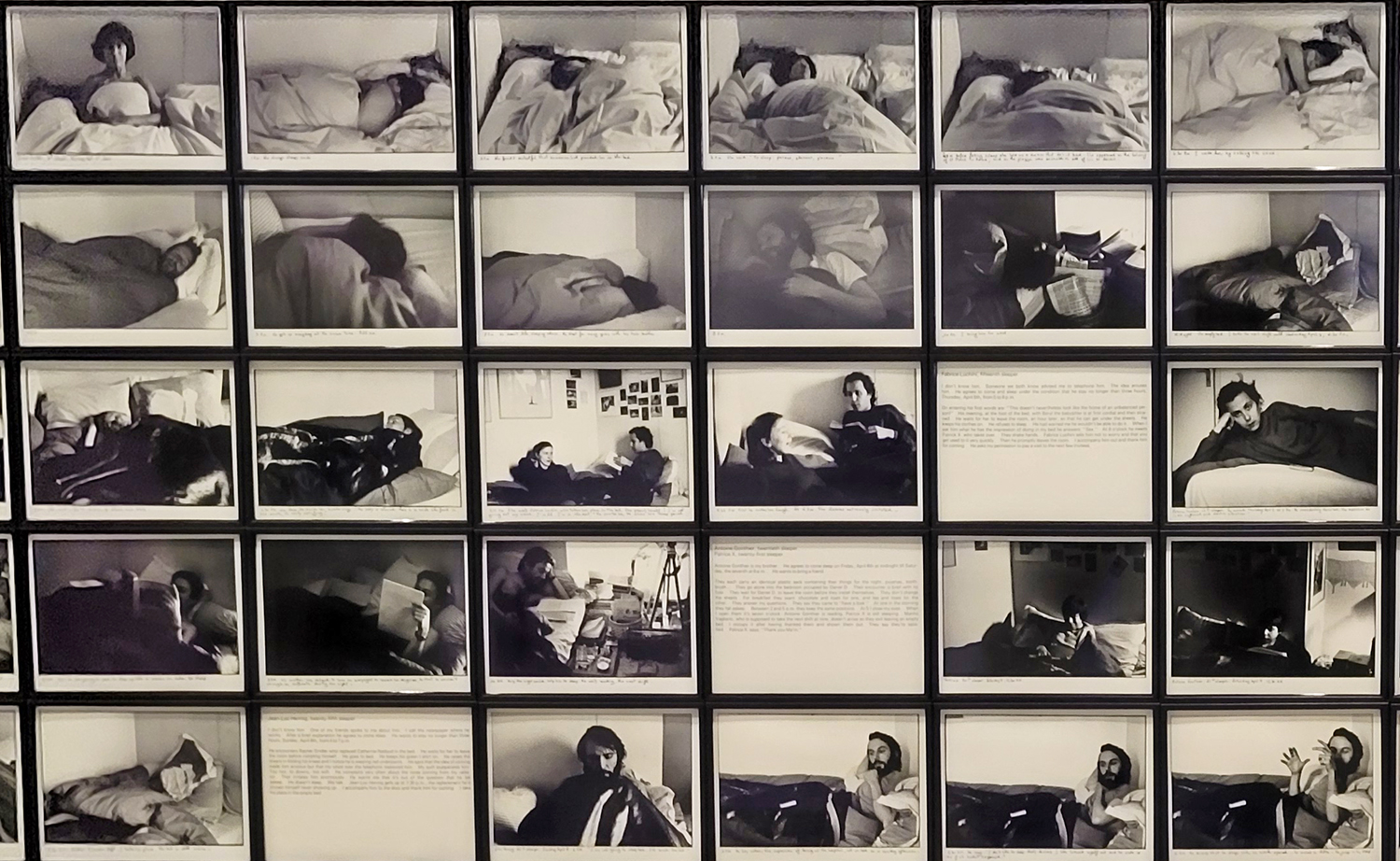
One of the most famous works on display, The Sleepers, is exemplary of this. Calle invited dozens of people to sleep in her bed in rotating shifts while she photographed and documented them. Some were friends, while many were strangers. The piece transforms her bedroom into a transitory stage where intimacy exists without romantic or sensual tones, imploring viewers to reconsider what it means to grant access to one’s private world.
That tension between the watcher and the watched again appears in Cash Machine, an incomplete series born from a bank commission from a Minneapolis bank involving an ATM outfitted with a camera. Ghostly black-and-white images capture people mid-transaction, unknowingly participating in an artwork about visibility and anonymity. Calle wrestled with the project for over a decade and ultimately addressed her inability to complete it in the companion video “Unfinished,” revealing how uncertainty in the process itself can become a part of the broader work.
Calle’s inquiry into surveillance slips into something more cinematic in Suite Vénitienne. Dubbed as an “assault on privacy,” Sophie Calle trails her subject through the foggy corridors and shadowed canals of Venice like a figure pulled from a film noir. Armed with a camera and a notebook, she becomes both detective and narrator, assembling fragments of her subject’s life from a careful distance, like an imaginary stakeout, gradually revealing itself as a portrait of fixation, authorship, and the strange theater of observation at a distance.
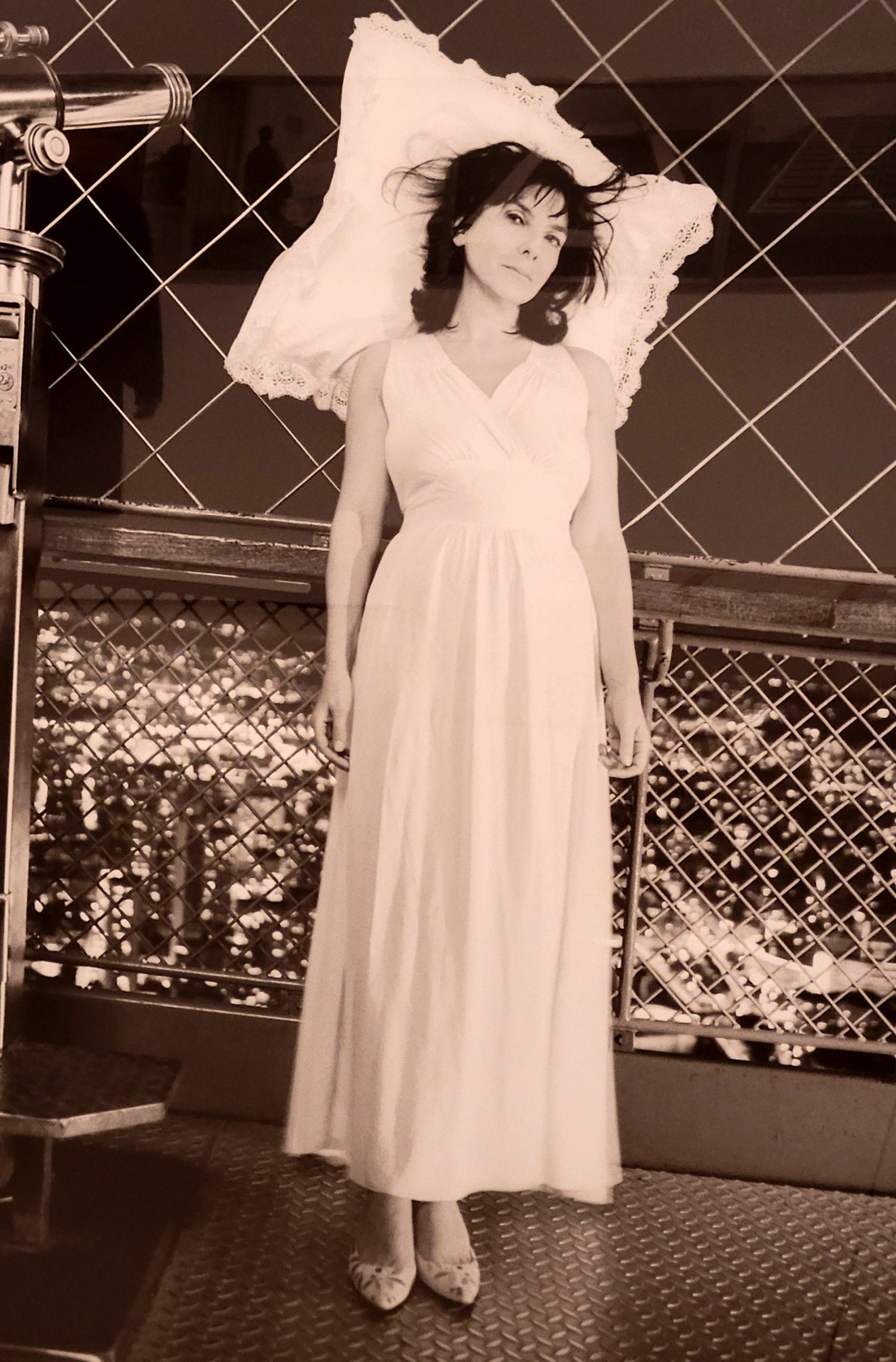
Calle places herself in the frame in The Shadow (1981), when she once asked her mother to hire a private investigator to follow her. In a striking reversal of roles of watcher and watched, she juxtaposes the detective’s report alongside her own account. What appears invasive becomes revelatory: by surrendering her privacy, Calle transforms exposure into creative control.
Further themes of vulnerability, absence, and mourning surface in North Pole, which documents a journey to the Arctic where Calle buried belongings belonging to her mother, fulfilling a trip her parent never got to take.
Throughout “Overshare,” Calle taps into a deeply human impulse: the urge to see, to know, and to be known in return. Decades before oversharing became second nature, Calle deduced that identity is often something we perform, carefully edit and selectively reveal, shape and put on for a seemingly invisible audience.
“Sophie Calle: Overshare” is on view through May 24 at the museum’s facility on the campus of Segerstrom Center for the Arts. Admission is free. For hours and visitor information, visit the museum’s website at https://ocma.art.