

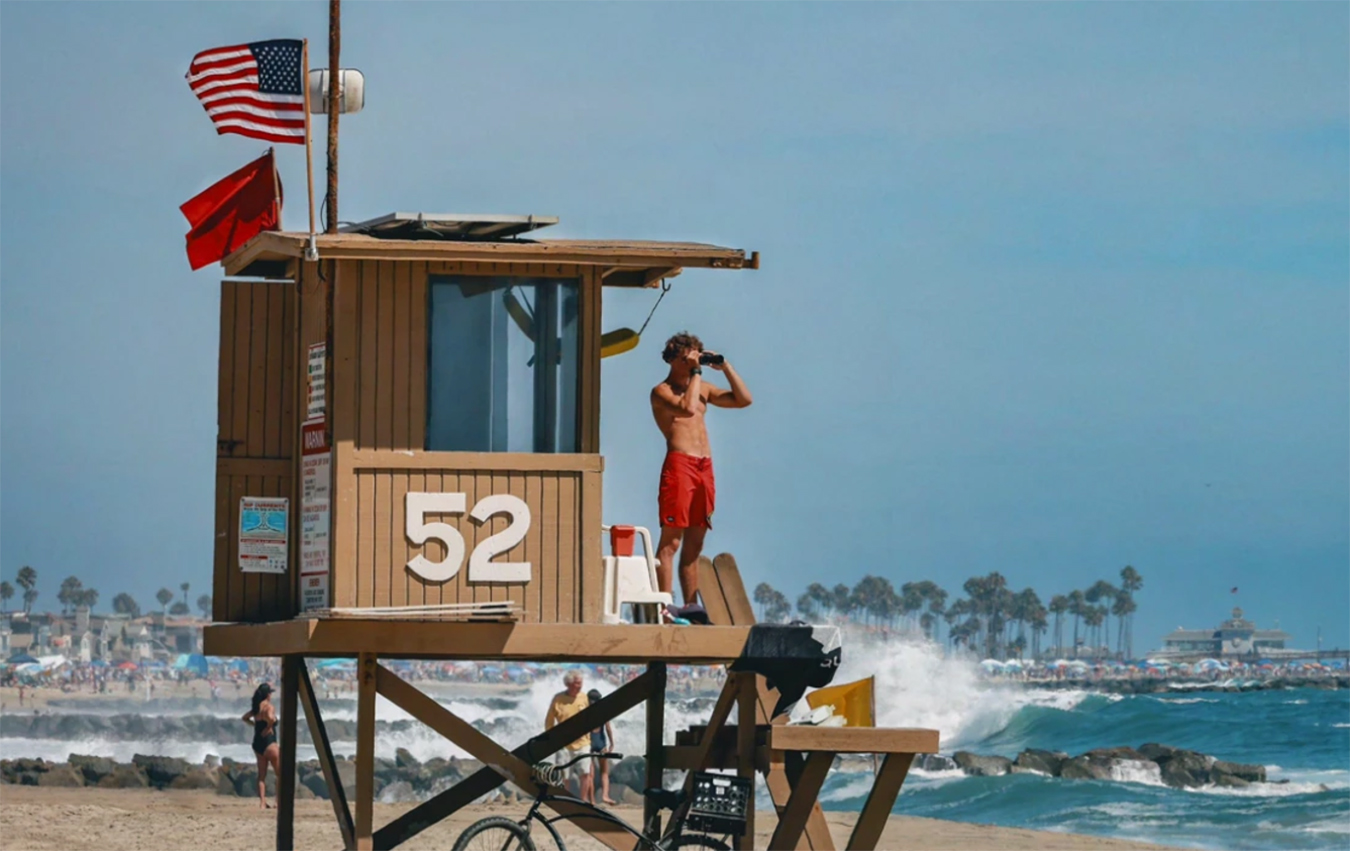
The world’s seas and oceans total 139 million square miles. Of that incomprehensible, undulating mass, 25-square miles belong to Newport Beach, where up to 100,000 visitors on a summer’s day come to swim, surf, and frolic on the city’s eight miles of beaches.
Unfortunately, even on those placid days, too many misunderstand the ocean’s oft-hidden dynamics. Newport’s lifeguards will attest to that.
Whether one simply wishes to dip the tootsies or risk their skeletal integrity on the killer breakers slamming into Newport’s notorious Wedge, it’s a sure bet that few bother to check the day’s ocean conditions.
Basically, there are five major factors affecting the surf of the day, according to Scienceinsights.org: temperature, salinity, currents, atmospheric interactions and human activity.
The ocean absorbs and stores heat, affecting local climate. Ocean currents redistribute heat and nutrients—the classic example being today’s La Niña that oceanographers and meteorologists are monitoring with trepidation and warnings. Simultaneously, scientists from assorted disciplines are measuring the pollution and climate changes that affect ecosystems and marine life. One might unscientifically conclude that Newport’s surfers, swimmers, boaters, toe-dippers and partiers are an integral part of that life system.
Newport’s lifeguards definitely come under the category of necessary marine life. According to Wikipedia, the city’s lifeguard department is recognized as one of the top such services in the United States, backed up in U.S. Lifesaving Association rankings.
This summer, “Newport Beach Lifeguards are fully staffed, with 96 lifeguards assigned across towers, truck patrols and rescue boats,” said NB Fire Department Chief Lifeguard Brian O’Rourke. Additionally, he said, 53 are assigned weekly to the Junior Lifeguard Program. With 75 reserve guards, the total count is 224 lifeguards supporting beach and ocean safety this year.”
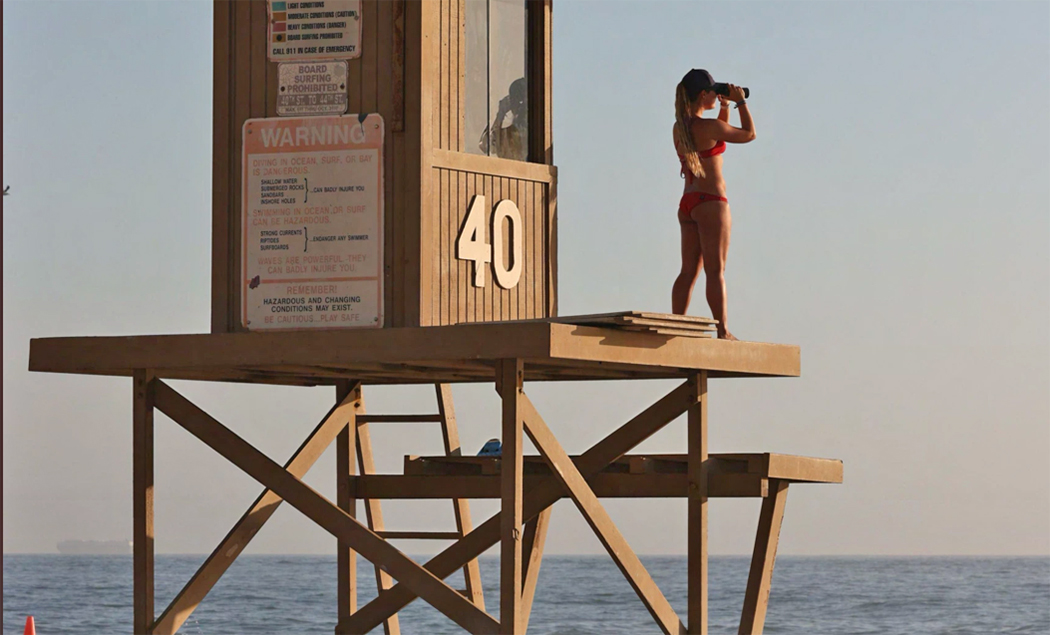
It takes a lot more than simply putting on a red bathing suit with a city emblem to become a lifeguard. New employees must undergo 109 hours of training at the city’s Lifeguard Academy before qualifying; returning lifeguards must re-certify. Coursework includes ocean lifeguard skills, leadership skills, customer service, municipal codes, CPR, first aid, and physical fitness requirements.
Returning guards must complete 16 hours of recertification training, including a 1,100-yard ocean swim.
In 2025, Lifeguards rescued 3,911 people of all ages and sizes. During high surf days, according to David Gibson, the fire department’s public information officer, “Our lifeguards usually rescue between 50 and 300 people in a single day…so we urge everyone to swim near a lifeguard, stay at least 100 feet away from piers and jetties, and learn how to escape a rip current.”
A rip current is aptly named: a swimmer literally is ripped away from shore and carried out to sea in a powerful channel of water whose speed has been measured up to eight feet per second.
According to the U.S. Lifesaving Association, rip currents account for the majority of sea rescues. If caught in a powerful rip current, even the strongest of swimmers probably will not prevail in their efforts to return to safety. However, to survive without exhaustion, literally “go with the flow,” swimming parallel to the beach until the rip subsides, then (as the lifeguards advise), swim diagonally back to the beach when out of the rip’s influence.
“If escape seems impossible, float on your back and wave your hands to signal for help,” PIO Gibson advises. Perhaps the toughest challenge of all when ensnared by a rip is to remain calm; otherwise, that frightening and exhausting rip could become a tearful RIP.
Lifeguard towers in themselves are communications centers, flying colored flags that indicate ocean conditions: green means small waves, and possible rip currents; yellow indicates moderate conditions, larger waves and rip currents; red shouts a loud, waving warning of hazardous conditions, large waves and advises expert swimmers only!
A black ball dictates no surfboards or skim boards due to crowds; however body boards are okay except at the Wedge, where broken Styrofoam is not an uncommon sight.
Beach safety includes on-the-sand safety, as well, PIO Gibson shares. “All beachgoers should apply water-resistant, broad-spectrum sunscreen 15- to 30-minutes before going outdoors, then reapply every two hours. Everyone should drink plenty of water throughout the day and should avoid digging holes in the sand deeper than knee height. Those holes must be refilled upon leaving.”
Food, drink, coolers, frisbees, balls, sunscreen, proper clothing, chairs, blankets and family and friends are critical for that memorable Newport day at the beach. Just remember not to leave Awareness and Caution in the car.