
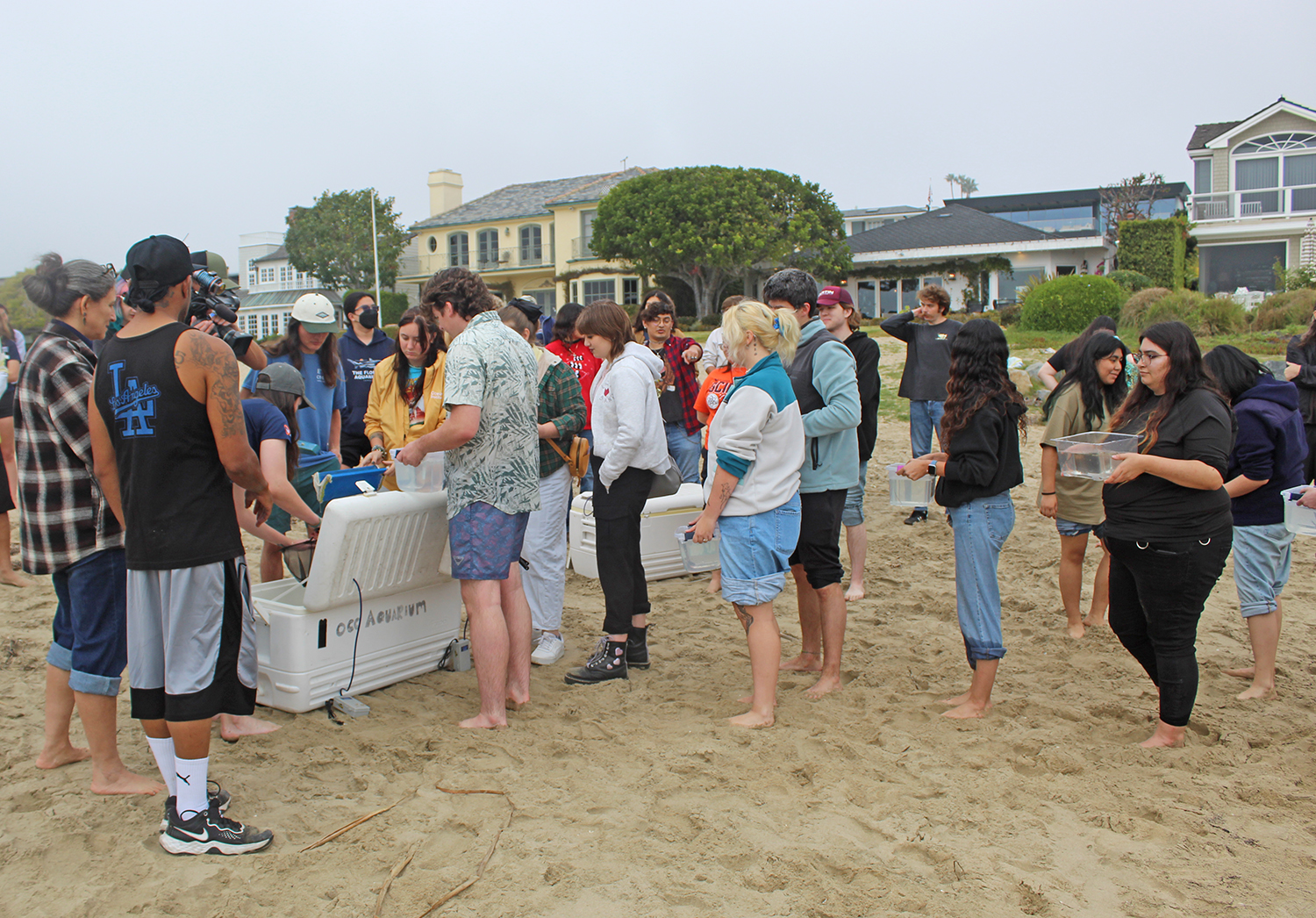
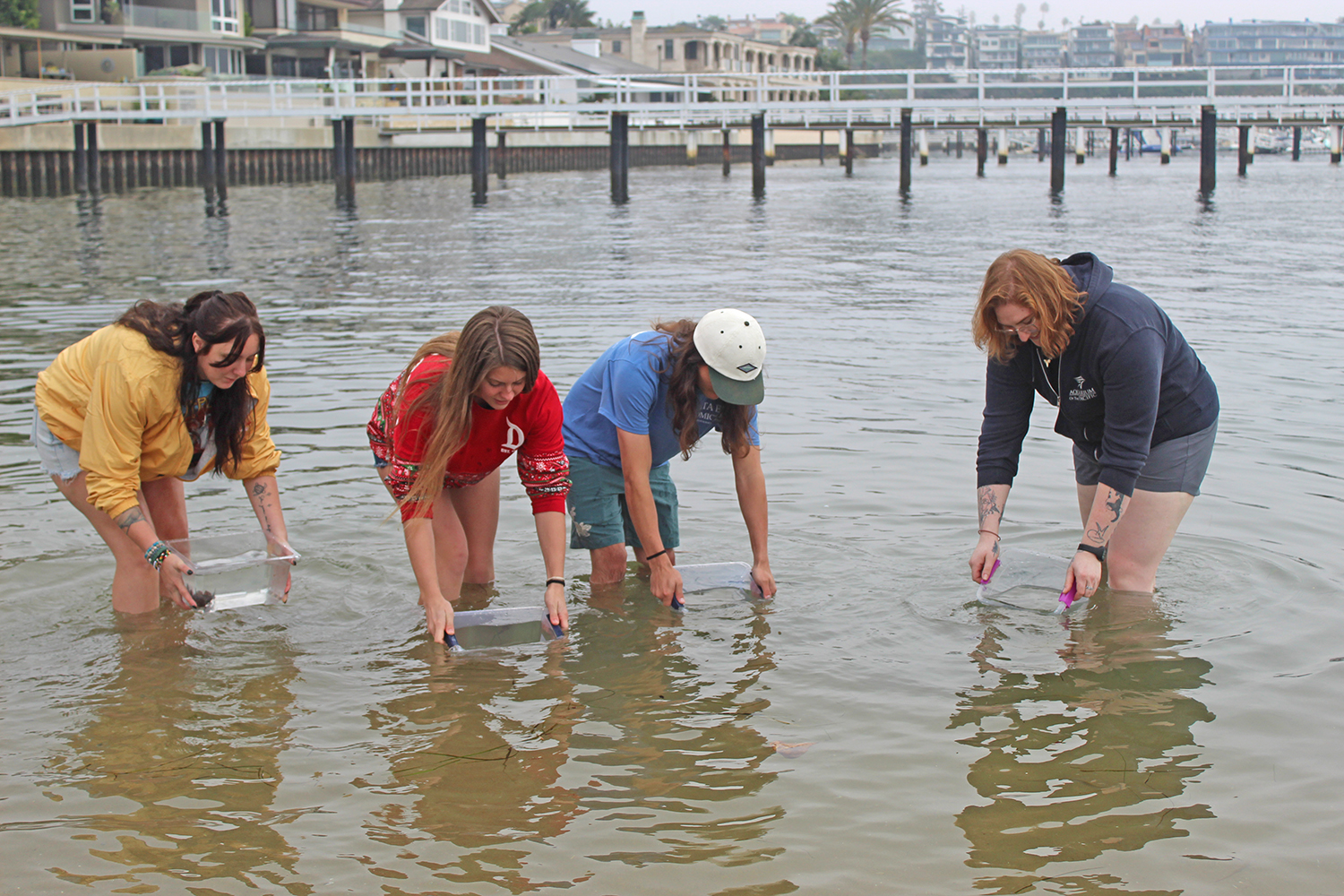
The Orange Coast College student carefully scooped up a tiny seabass from a large cooler, placed it in a soft-sided pouch so the fish’s tiny cheek tag could be scanned, then transferred the fish to a small plastic container filled with seawater. A fellow student carefully carried the container several feet into Newport Harbor and then released the fish into the water.
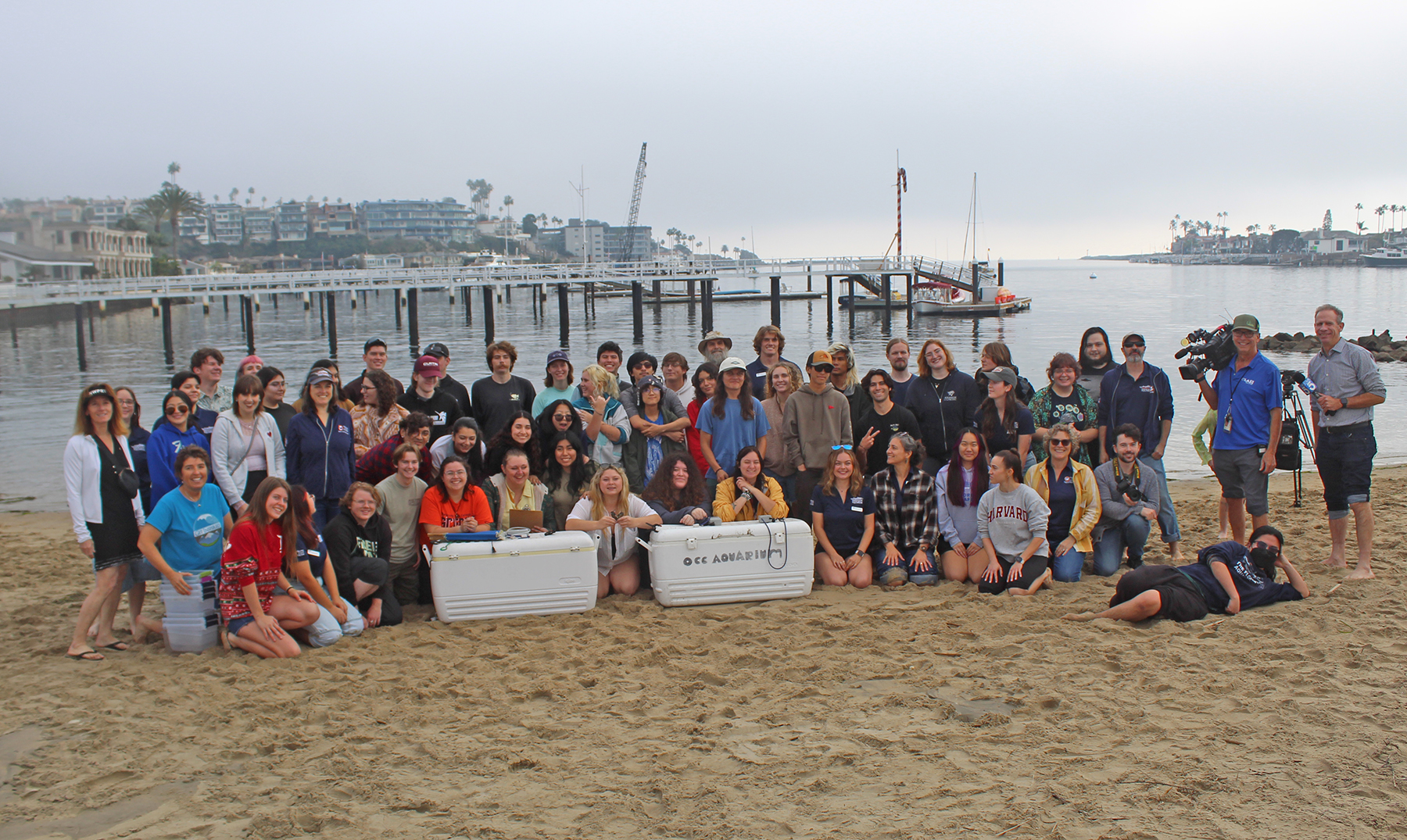
This procedure was repeated more than 100 times on Friday, Dec. 12 by Orange Coast College students who joined forces with the nonprofit organization Get Inspired and the Newport Harbor Patrol to release 103 white seabass into the ocean near the Harbor Patrol Office in Corona del Mar.
The event is part of a broader ocean restoration and education initiative led by Get Inspired, which partners with schools across Southern California to rebuild marine ecosystems. The young seabass have been carefully raised in tanks on the OCC campus as part of this collaborative project.
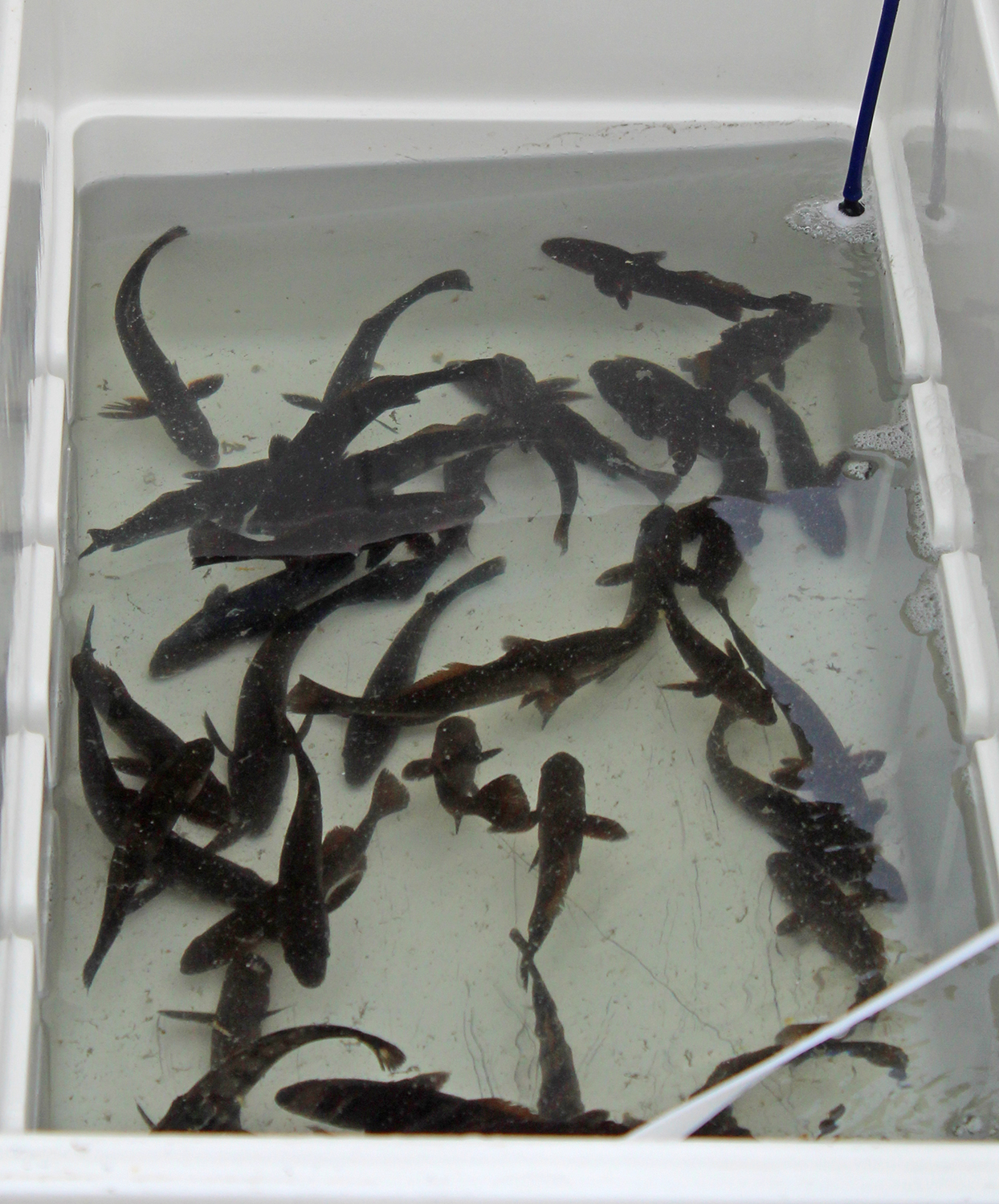
Students from OCC have nurtured the seabass since their early life stages, feeding them, monitoring their growth, and preparing them for life in the wild. The eggs and hatchlings were provided by Hubbs-SeaWorld Research Institute, which is committed to species conservation and started its Seabass in the Classroom project in 2013.
After the tagged fish are scanned, a report will be submitted to Hubbs-SeaWorld Research Institute. If a fisherman should catch a local seabass in the future, they can chop off the head before cleaning the fish and take the head to a local bait shop so Hubbs-SeaWorld Research Institute can be contacted to come and check the tag to see if the fish was raised by OCC or one of the other schools involved.
Restoring White Seabass Populations
According to information from Get Inspired, the white seabass population has been integral to the marine ecosystems and fisheries off Orange County.
Historically abundant along the Southern California coast, their populations experienced significant declines due to overfishing and habitat degradation. In response, the California Department of Fish and Wildlife and organizations like Hubbs-SeaWorld Research Institute and Get Inspired have been actively working to restore the white seabass population with hatched, grown and released fish.
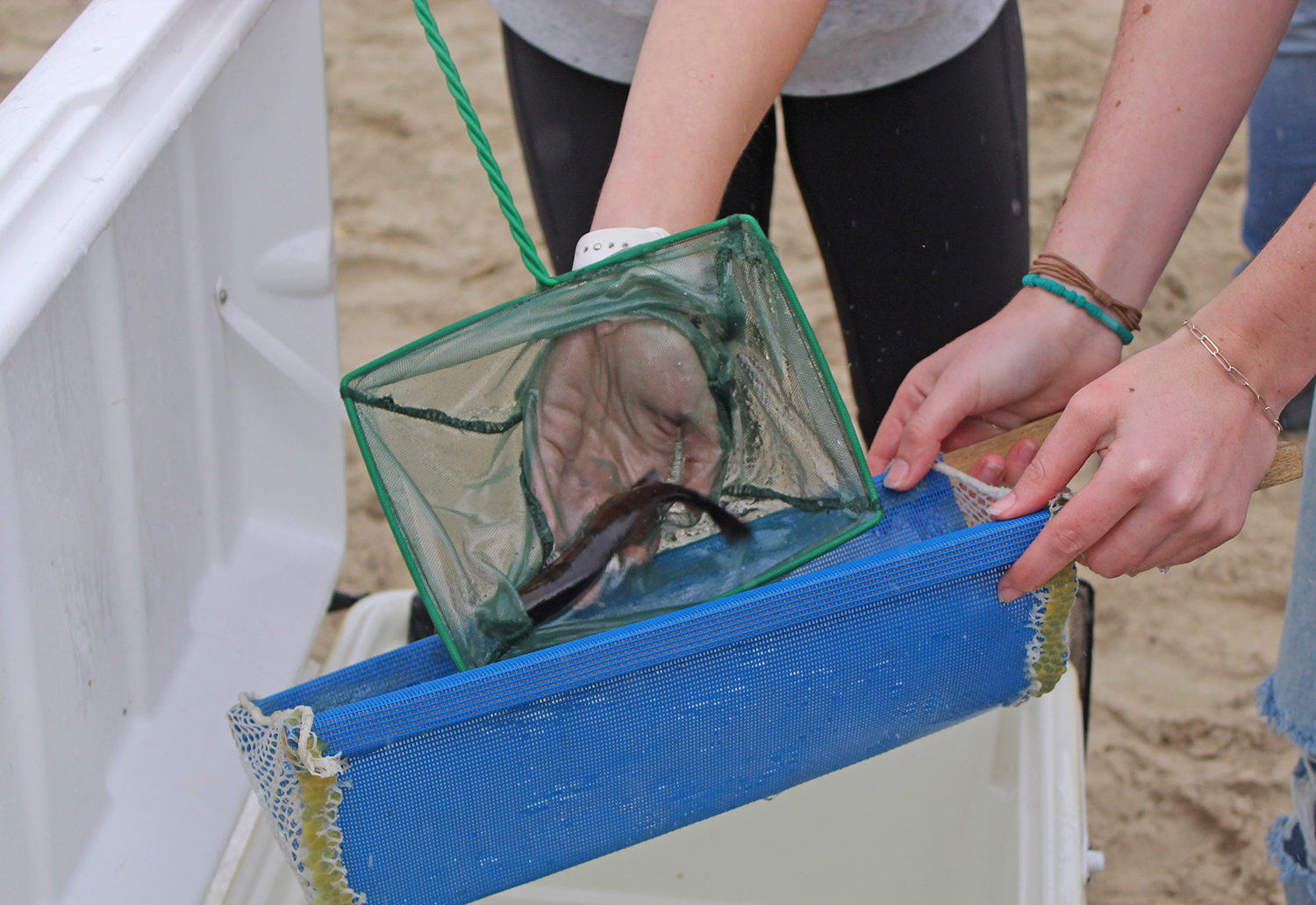
To date, more than 2.5 million white seabass have been released into Southern California waters, aiming to bolster the wild population. All fish released from this project are tagged, and some have been caught many years after their release.
Genetic studies have confirmed that a substantial portion of white seabass, including both juvenile and adult fish, originate from the hatchery. The new analysis showed that 30 percent of adults sampled from the wild were hatchery fish. In addition, 46 percent of smaller fish, those less than two years old, that were caught in the wild were also hatchery fish.
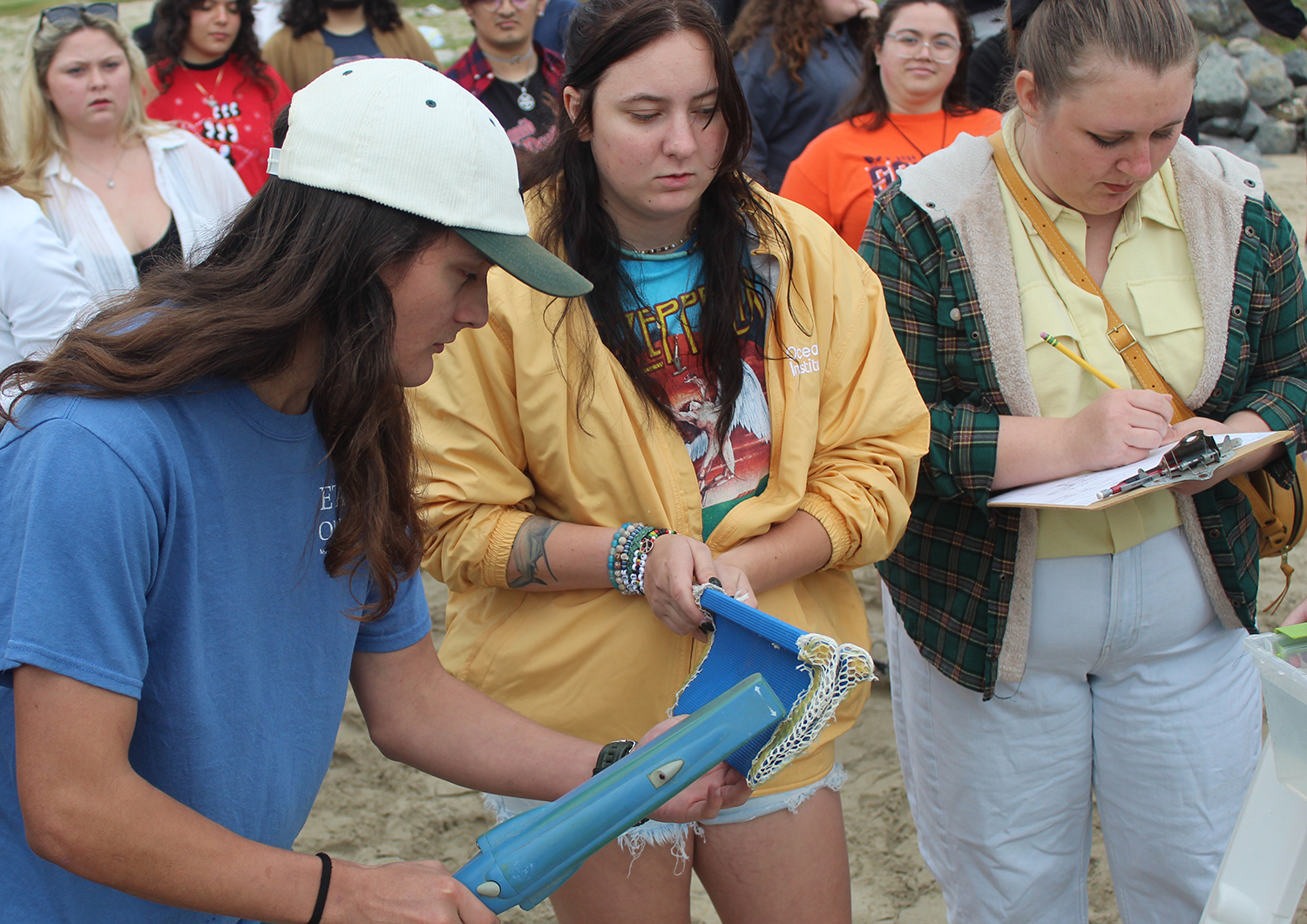
The increased abundance of white seabass due to the hatchery program demonstrates that the fish species is recovering and these efforts have positively impacted both recreational and commercial fisheries.
Mary Blasius is the aquarium director at Orange Coast College and oversees the day-to-day care of the fish by students, including feeding the fish and cleaning the saltwater-filled tanks.
The fish come from Hubbs-SeaWorld Research Institute hatcheries in Carlsbad and Mission Bay. The fish are bred in captivity until they are four to six inches in length and then released.
“We have had these since September, so a little over four months,” said Blasius. “That’s not much time, but they grow pretty fast.”
According to Blasius, the seabass can grow up to four feet in length, which makes them a popular recreational fish. But in their smaller stage, they are an important source of food for birds, sea lions and dolphins.
“The seabass population has rebounded,” said Blasius. “And now they estimate, through genetic work, about 40 percent of the population that’s off of our coast here has basically some offspring of these hatchery fish. It’s definitely made a difference to the point where they’re actually starting to look into other species and move away from the white seabass, because this population has recovered for the most part in the ocean.”
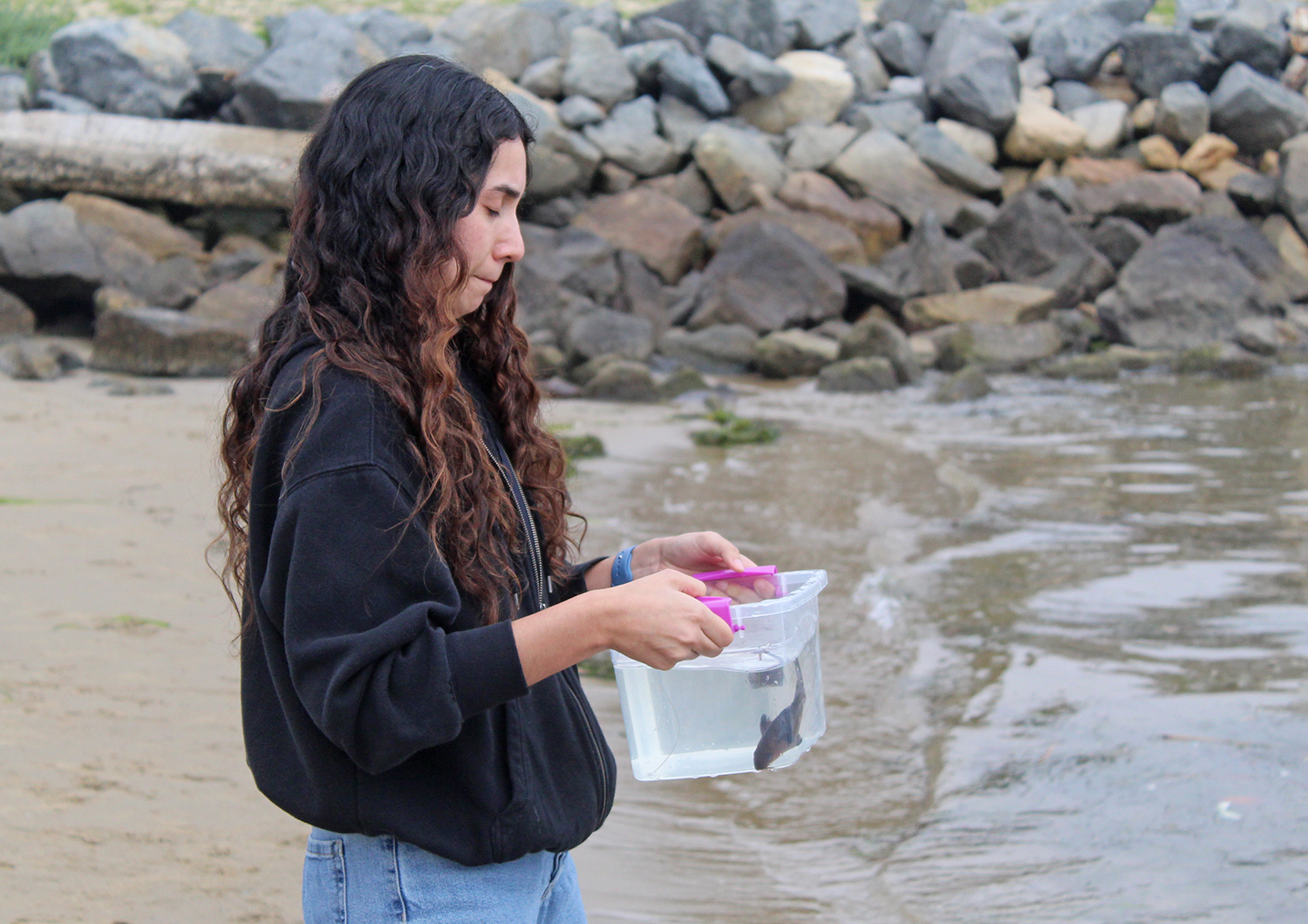
Blasius said they chose the Newport Harbor Patrol beach to release the fish because there is eel grass in the water which serves a sort of protection for the fish as they are adjusting to life in the ocean.
“Life is hard in the ocean. Nobody’s going to teach you anything. So even if they’re born into the wild, they’ve just had to survive by instinct. That’s kind of the same thing here,” explained Blasius.
According to marine biologist Nancy Caruso of Get Inspired, the students are learning about water chemistry and animal husbandry, which segues into ocean restoration.
“I have students all over the county who raise species for me that I’m releasing in the ocean,” she said. “We started with kelp. The kelp forests were decimated for 22 years. I taught 5000 kids all over Orange County how to grow kelp, and then I trained 285 volunteer divers to go out and help me plant the kelp. It took us 10 years, but now we have thriving kelp forests in Orange County, and it’s because our community came together and worked on that.”
“My background is in aquaculture and marine biology, so I thought what else can we grow?” continued Caruso. “So, I started on green abalone. That’s another species that is very iconic in California. I started teaching students to grow green abalone, and we’ve planted those in the ocean to restore them.”
Caruso said that the spring semester at OCC will repeat the procedure of the fall semester.
“The fish will be delivered in January, the kids will weigh them and measure them and put the tags in them and feed them like we did all semester, and then we’ll release them again in June,” said Caruso. “This is the only project in the United States that’s putting fish in the ocean. This is life changing and it’s world changing. We all need to be thinking like this, how to do how do we restore things instead of just taking them? And if we’re all working on that, then things will be a lot better.”