
A new musical era has begun for Pacific Symphony.
On Wednesday, Feb. 4, hundreds of Pacific Symphony subscribers, donors, VIPs and members of the media came to Segerstrom Concert Hall to experience a presentation of the symphony’s 2026-2027 Classical Series, presented by Hal and Jeanette Segerstrom Family Foundation.
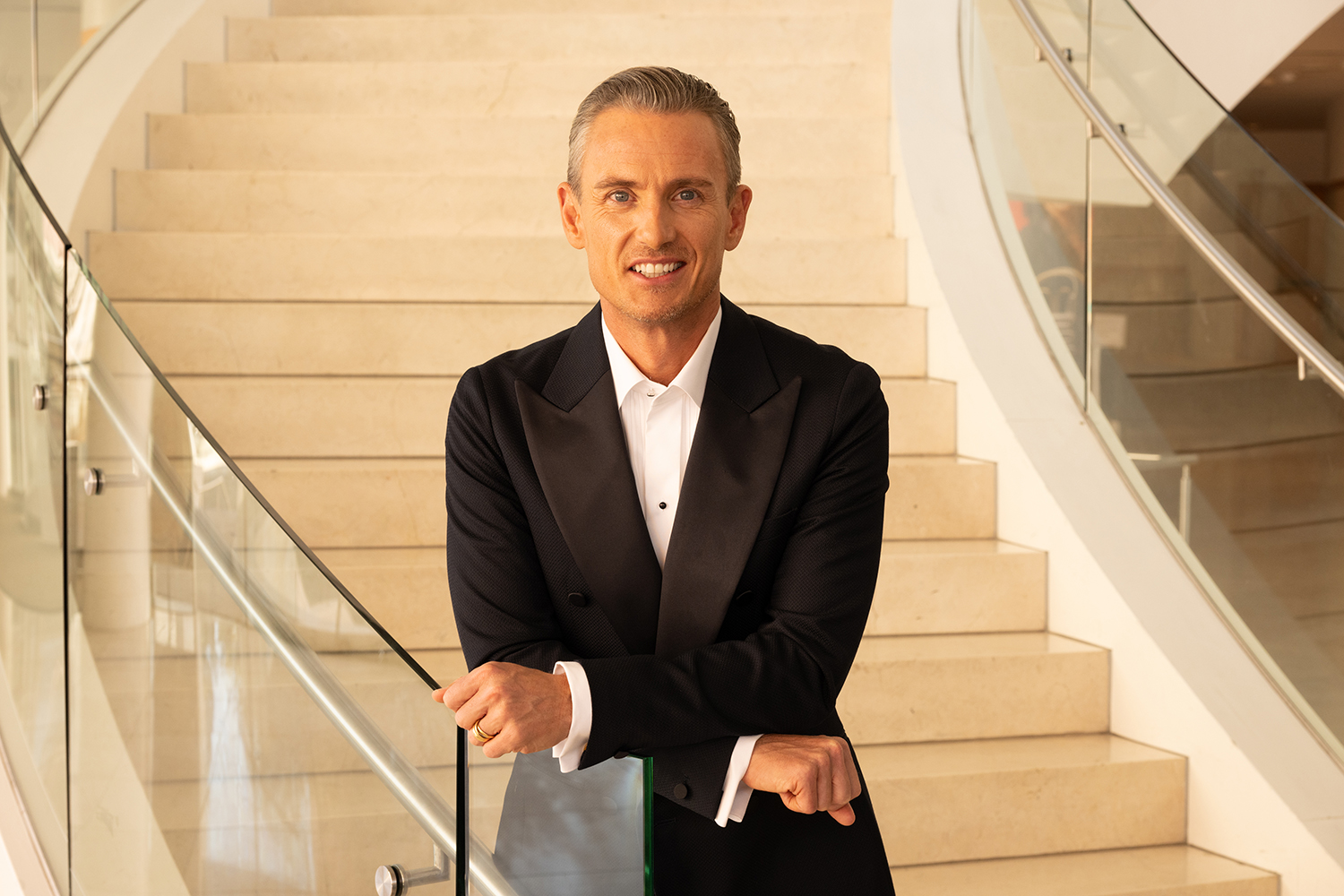
The new season, which begins this fall, heralds in a new era under the direction of Artistic and Music Director Alexander Shelley, who assumes full leadership of the orchestra from longtime Music Director Carl St.Clair, who spent 35 years leading the Pacific Symphony and guiding it from a small regional orchestra to one with international renown.
Shelley has designed the symphony’s 48th season with a bold artistic vision inspired by America’s 250th anniversary. The season’s two opening programs also celebrate the 20th anniversary of the Renée and Henry Segerstrom Concert Hall (the orchestra’s home) and the 40th anniversary of Segerstrom Center for the Arts.
Commemorating America250, the season articulates the ideals expressed in the Declaration of Independence and celebrates the artists who have shaped America’s classical legacy with highlights including Mahler’s Second Symphony, a two-week Beethoven Revolution Festival, John Adams’ opera “Nixon in China,” a special Opening Night featuring violinist Joshua Bell, and a one-night-only concert with pianist Emanuel Ax.
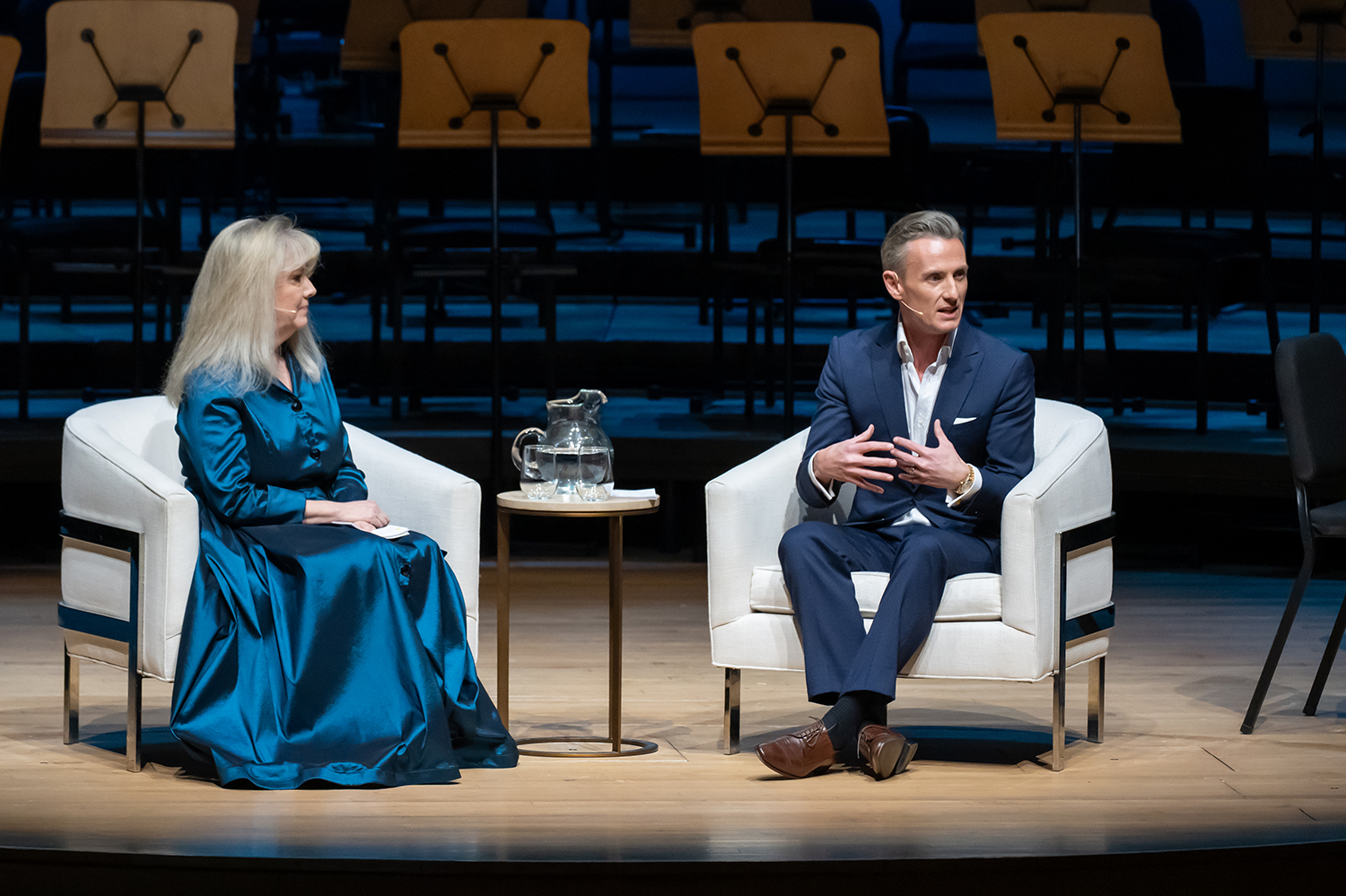
During the season preview on February 4, Maestro Shelley was in conversation with Maria Hall-Brown of PBS SoCal and discussed his concepts for the season, and for Pacific Symphony.
“When I’m thinking about seasons, I like to think in big picture themes, ideas that might course through a season,” Shelley told the invited guests in the concert hall. “Sometimes they’re defined by moments in history, or they might be defined by ideas in our society and environment. And in this case, of course, July 4 of this year, we celebrate USA 250. We celebrate it. We explore it. We think about it. We think about where we stand now, what this adventure has been, what it has meant for the world as well. And I was anxious and eager to dig into that, look at the artistic side of it, and also look at artistic expressions of some of the ideas that perhaps underscore USA 250 and the Declaration of Independence.”
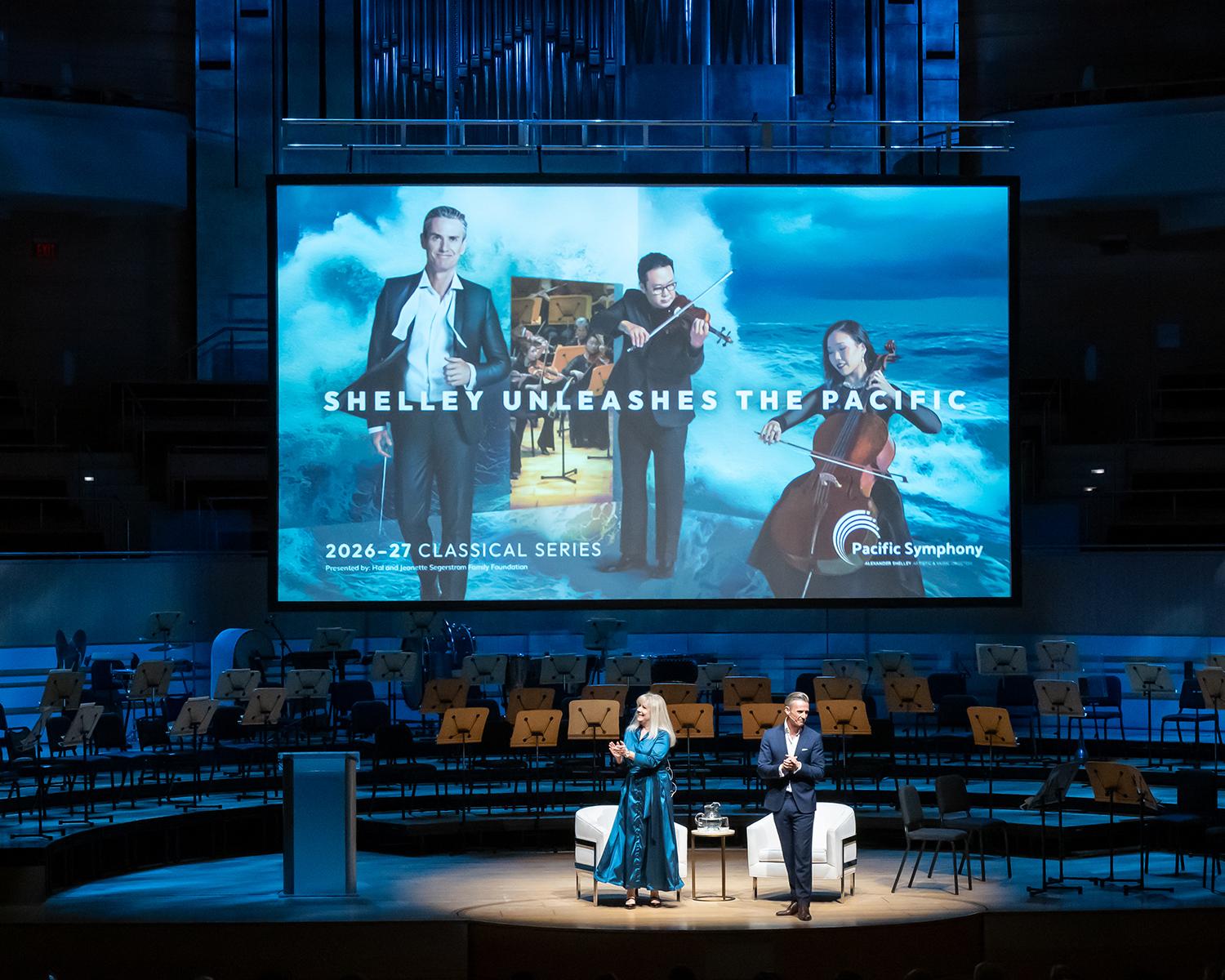
During the USA250 celebration, Shelley will be exploring composers past and present who called and still call the United States their home. Some of the names may surprise people, said Shelley.
“There’ll be names like Copeland and Bernstein and Gershwin, names that you might immediately associate with United States. But then there’ll be composers like Rachmaninoff and Stravinsky and Bartok. You might think they were not American composers, but they in fact all ended their lives as American citizens. They came over here and built their lives here, and they contributed to the American artistic story.”
To keep with the symphony’s annual presentation of a semi-staged opera, Shelley wanted to find something a little different, something that digs into American history. That opera will be “Nixon in China” by John Adams.
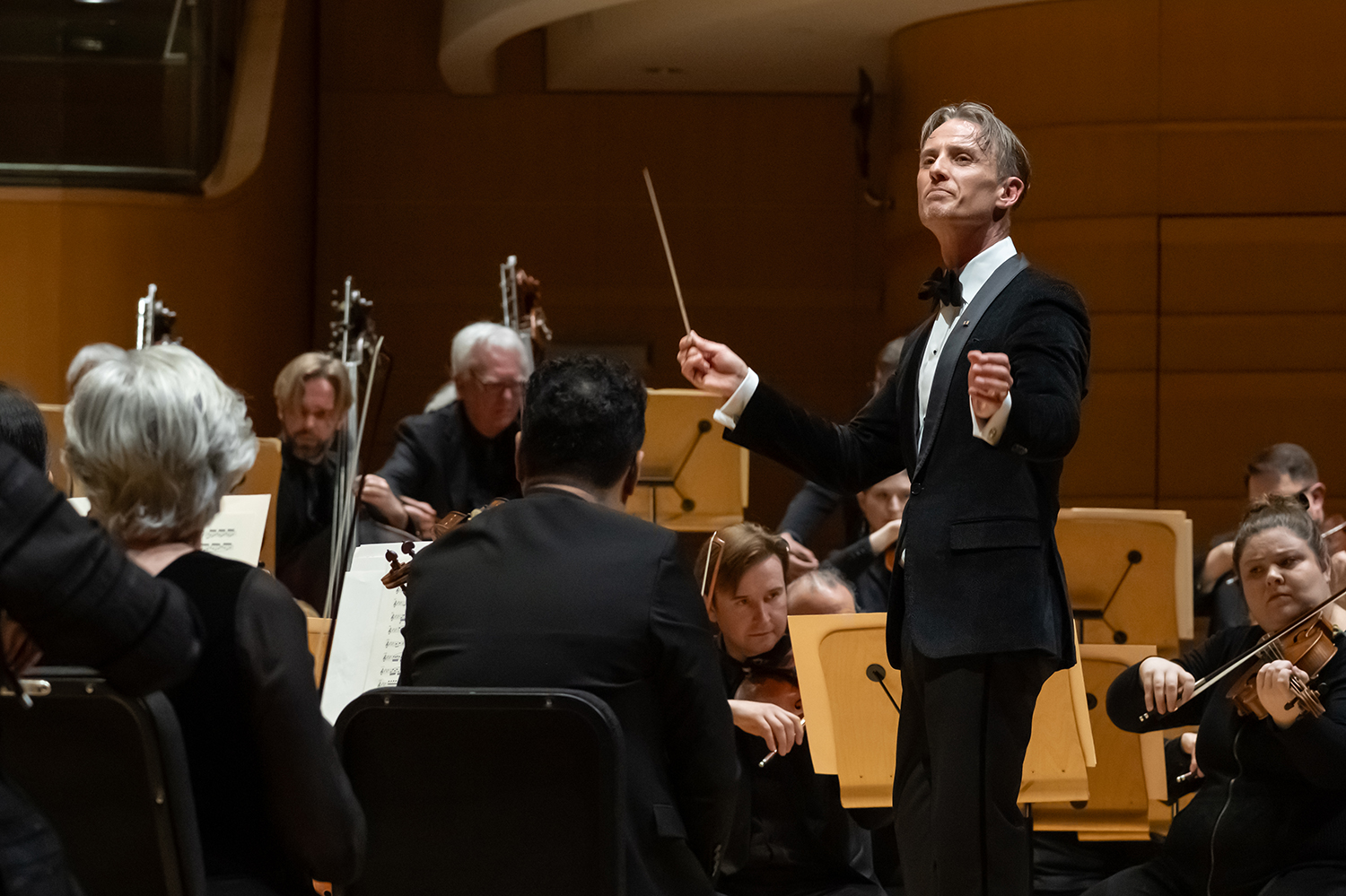
“This is as good as it gets, that journey that Richard Nixon took to China in 1972,” said Shelley. “I think some of the ideas behind it are as important to think about nowadays as they ever have been. And this opera is one of the modern greats. It’s in the English language. It’s immediately accessible for audiences, you can really chart and follow the story with John Adams and his amazing musical language, which is again so immediately accessible and compelling. He explores not just a moment in history and a moment in politics, but actually the psyche and the dynamism of Mao, of Nixon, with their spouses, and how their personalities were brought to bear, and how important that was in that amazing moment of history.”
Shelley said there is another significant milestone to celebrate: the 200th anniversary of
Beethoven’s death, which in a way connects with USA250.
“What makes Beethoven so extraordinary and so impactful is his humanistic and his political drive,“ explained Shelley. “Music for him was not always just about making beautiful sounds that move people. It was about bringing a message to people and changing society, much in the same way that the founding fathers wanted to change the world with the Declaration of Independence-and did change the world. So there’s a symbiotic relationship for me between that moment in American history, and that moment in musical history where Beethoven put down on paper his journey from his first through his ninth symphony and made a statement so radical, so powerful, not just about music, but about humanity and optimism and hope and saying we can aspire for better. We can change the world that is directly linked with that foundational American concept.”
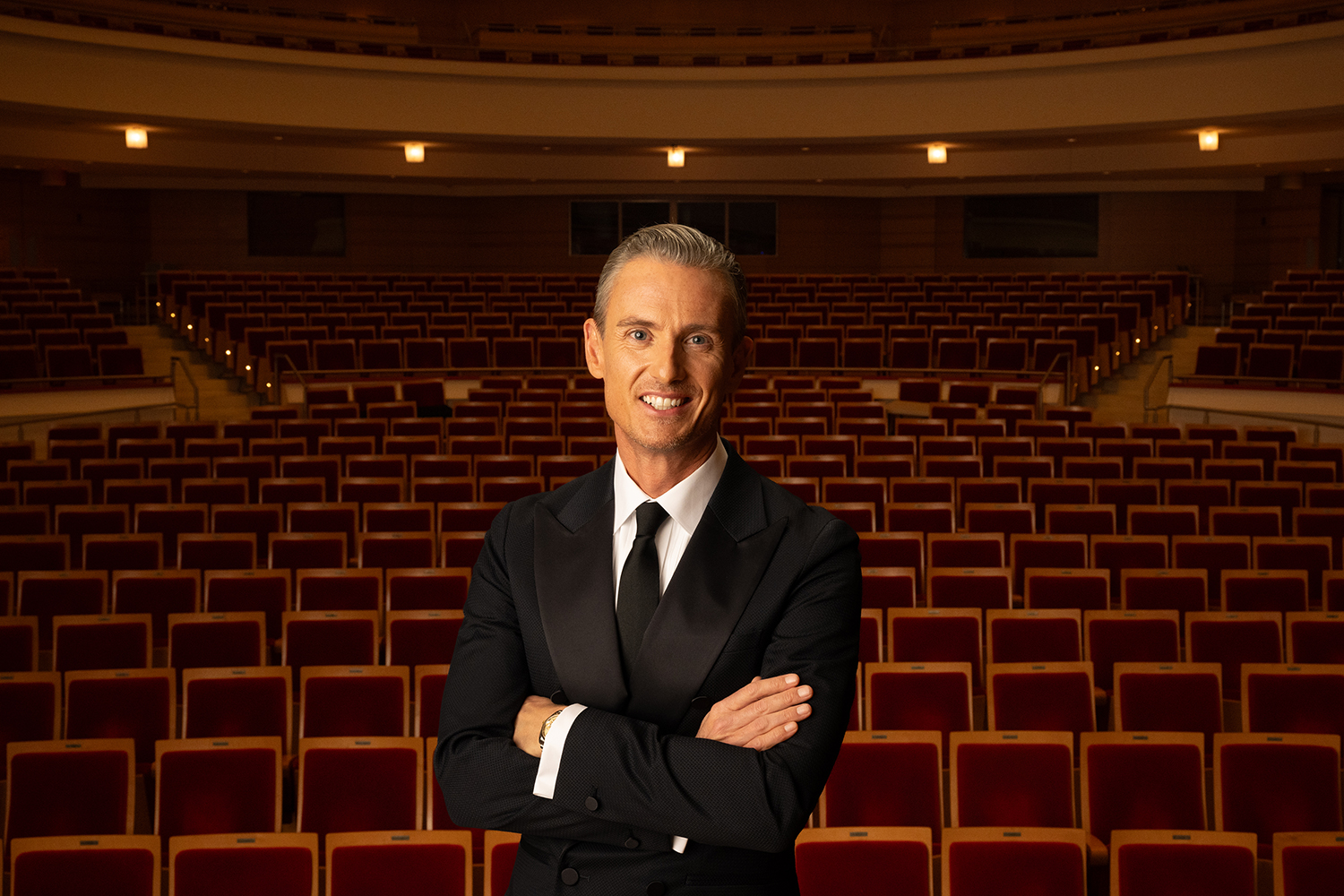
To emphasize Beethoven’s importance, Shelley and the Pacific Symphony will undertake over the course of two weeks a cycle of all nine Beethoven symphonies.
“USA250 and Beethoven 200 are yoked together in our exploration of ultimately the idea of hope through the season, hope through political activism, and hope through music,” stated Shelley.
Mahler’s Second Symphony, “Resurrection,” opens Pacific Symphony’s classical subscription series, October 1-3, 2026. A work of vast scope and emotional intensity, it was Mahler’s first symphony to integrate orchestral writing with voice and language.
“It touches on everything that makes symphonic and choral music so special for me,” said Shelley. “I mentioned the idea of hope. When he was writing music, Mahler was searching for the most profound, metaphysical, philosophical answers. In the first three movements of his Second Symphony, we start in darkness. We start in a dark C minor. You feel the weight and pressure of life and doubt on your shoulders in beguilingly dark music, music that so often feels like a kind of seductive funeral march and has that extraordinary bandwidth of some of the loudest and most immediate music you can think of, coupled up within a few seconds with some of the most intimate music sounds. Ultimately, as the singers come in and the chorus enters, Mahler offers us on a cerebral level something that speaks deeper, more profoundly, more clearly, to our souls,”

“He offers us a vision of absolution, a vision of hope that ever since I first performed the piece I’ve carried it with me as a battery, something that that supports me and offers me so much resilience and hope, and I always hope that when I perform this piece of music, that at least some of you, and if not all of you, will leave the concert hall feeling like you’ve had an experience for life, something that touched you in a way you can’t necessarily immediately express, but you know you’ve been touched and changed by it, because it is so powerful. So we begin the season with that, and it really encapsulates so much of what I want us to explore.”
Shelley went over more highlights of the 2026-2027 season, then offered a philosophical observation on the power of live music.
“I just hope that in the coming season, we have lots of opportunities to enter into that most important part of the human experience, which is sharing physical live space together, sharing experiences that are not immediately tangible, but are incredibly real.”
Shelley noted that when he is asked about the value of music, he points out that you can measure the space it takes for a chair or a table and put a value on what it’s worth to buy.
“he real currency of consciousness is love and fear and hope and melancholy and everything in between,” he said. “That is the currency of life. This is the currency of the material world. For me, this space represents that opportunity to come together, sometimes with undefined goals, to recognize the fact that we need these moments in our lives where we just let emotion and experience run without having to define everything. At the biggest level, that’s my hope, that we can just start in with this coming season and go on this journey consciously together and say that this is a very, very special place to share music.”
Pacific Symphony’s 2026-27 Classical Series subscriptions are now available. Single tickets will go on sale later this year. Visit www.PacificSymphony.org for more information including the complete 2026-2027 Classical season.